Echoes
Israel Campos
Echoes
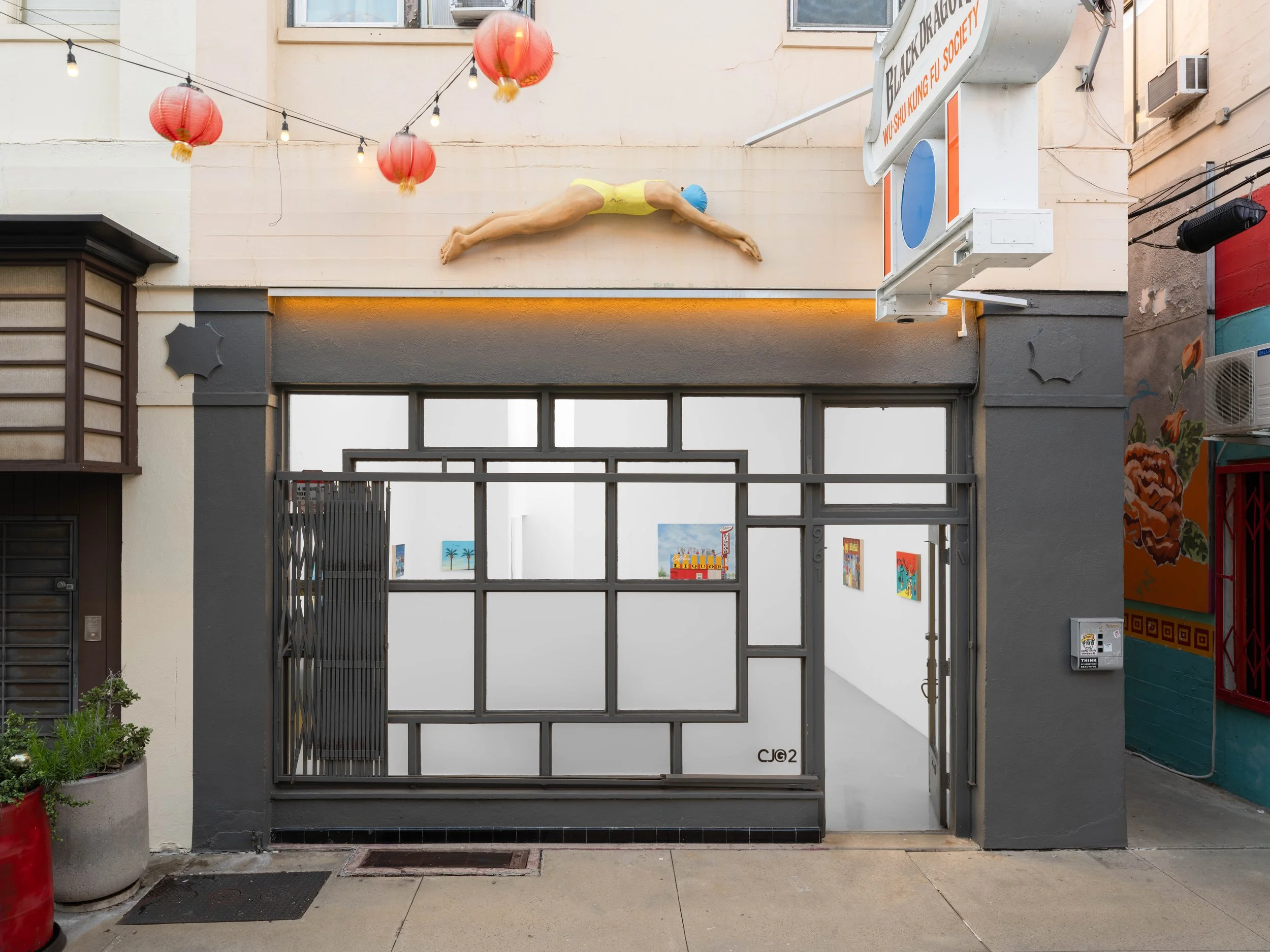
961 Chung King Road
JANUARY 16, 2026 - february 14, 2026
OPENING RECEPTION: friday january 16, 5-8pm
Charlie James Gallery is pleased to present Israel Campos: Echoes, the artist’s first exhibition with the gallery. Campos excavates the layered cultural histories of Los Angeles using a combined painting and screenprinting technique. In his role as artist-historian, Campos reveals the figures, stories, and myths that echo through the city’s history, folding Mexican folklore into its fabric and often drawing from primary texts for narrative and stylistic inspiration. In adapting the stylistic conventions of pre-Columbian painting, Campos thins the veil between past and present, physical and mythological, turning the fresh eye of history onto the too-familiar climate disasters and political failings of the 21st century. But the presence of history offers its own kind of hope – cultures have clashed and commingled before and will do so again, yet their stories live on just below the surface, waiting to reveal themselves to the open-eyed observer.
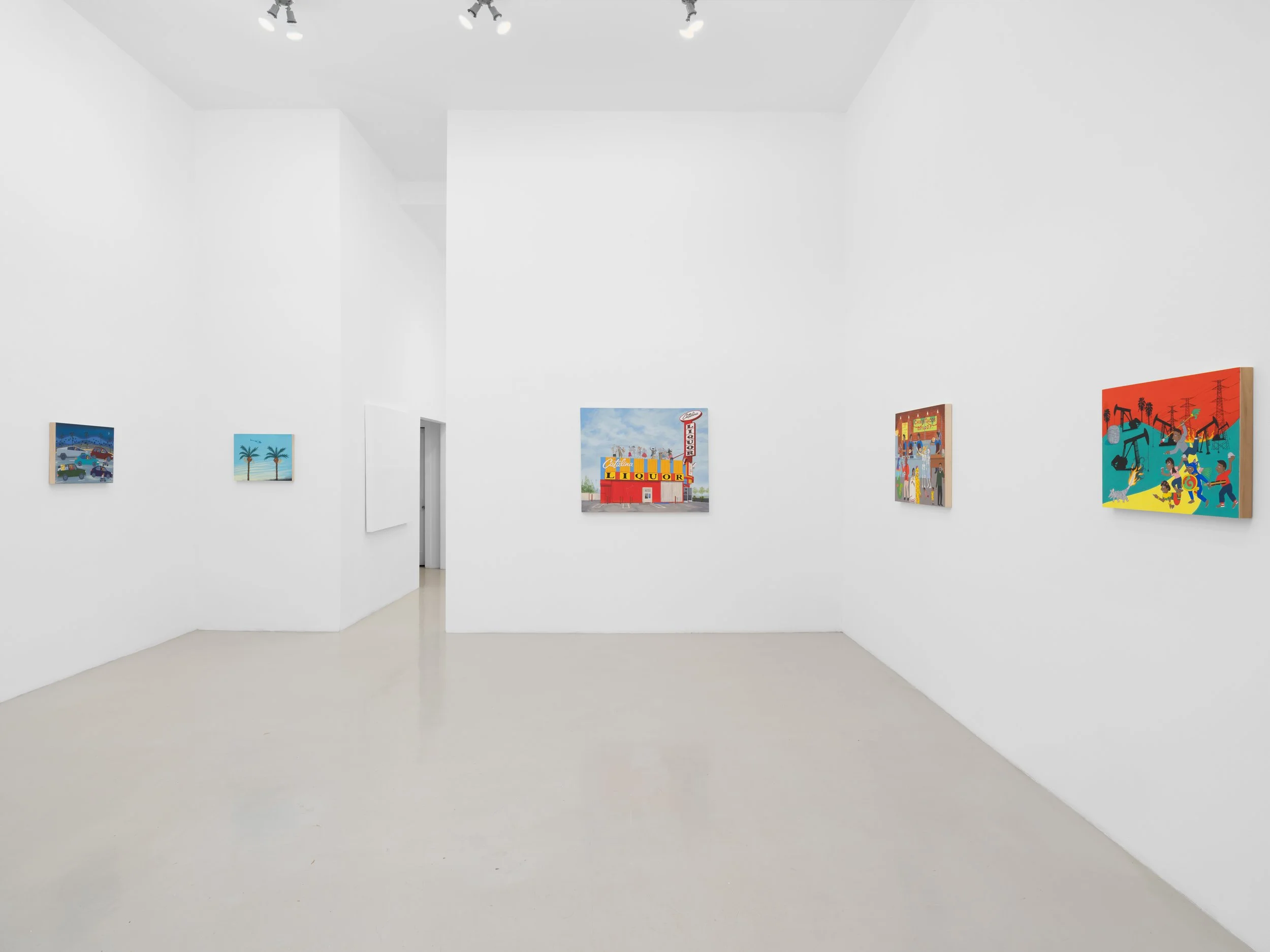
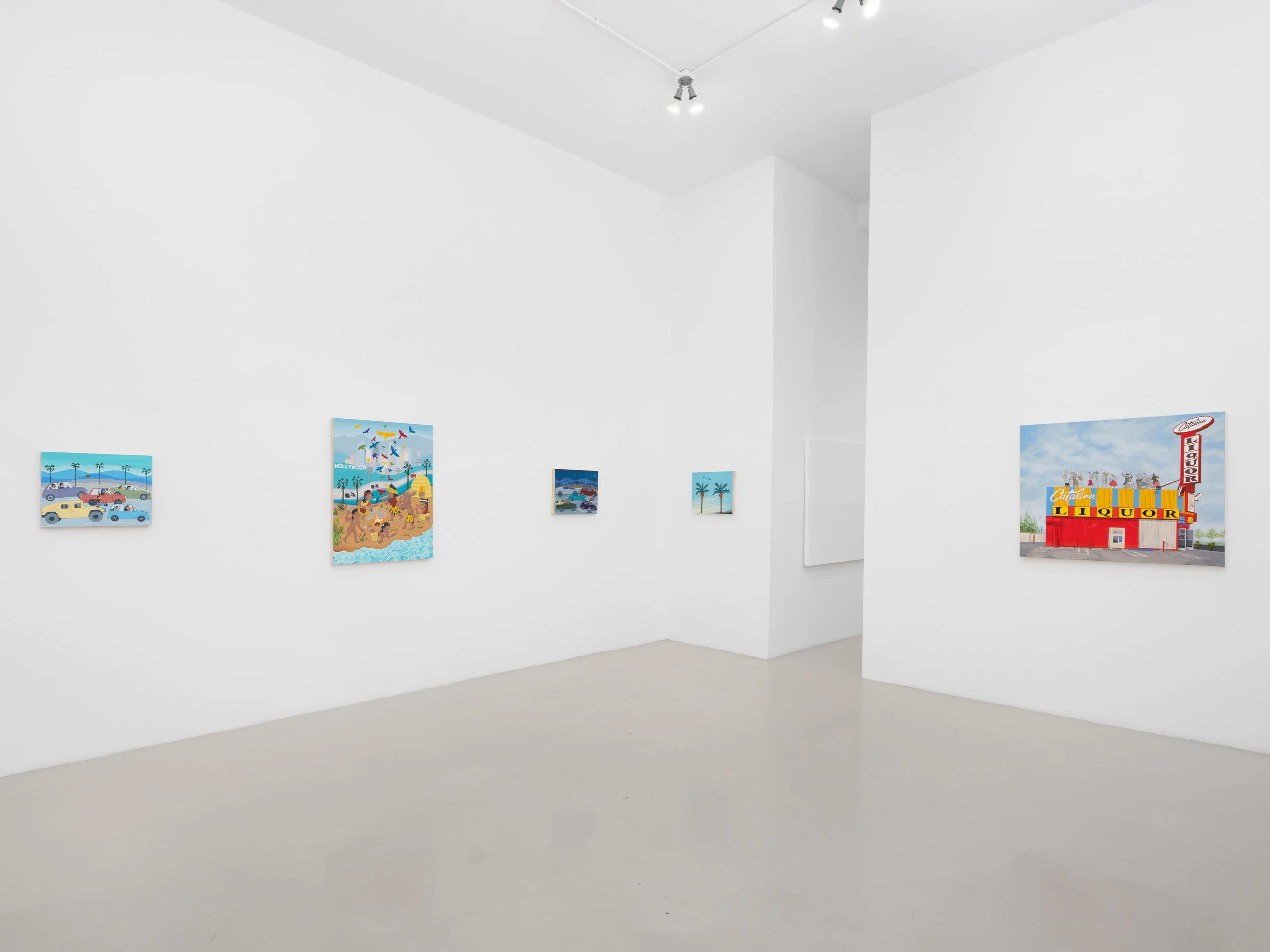
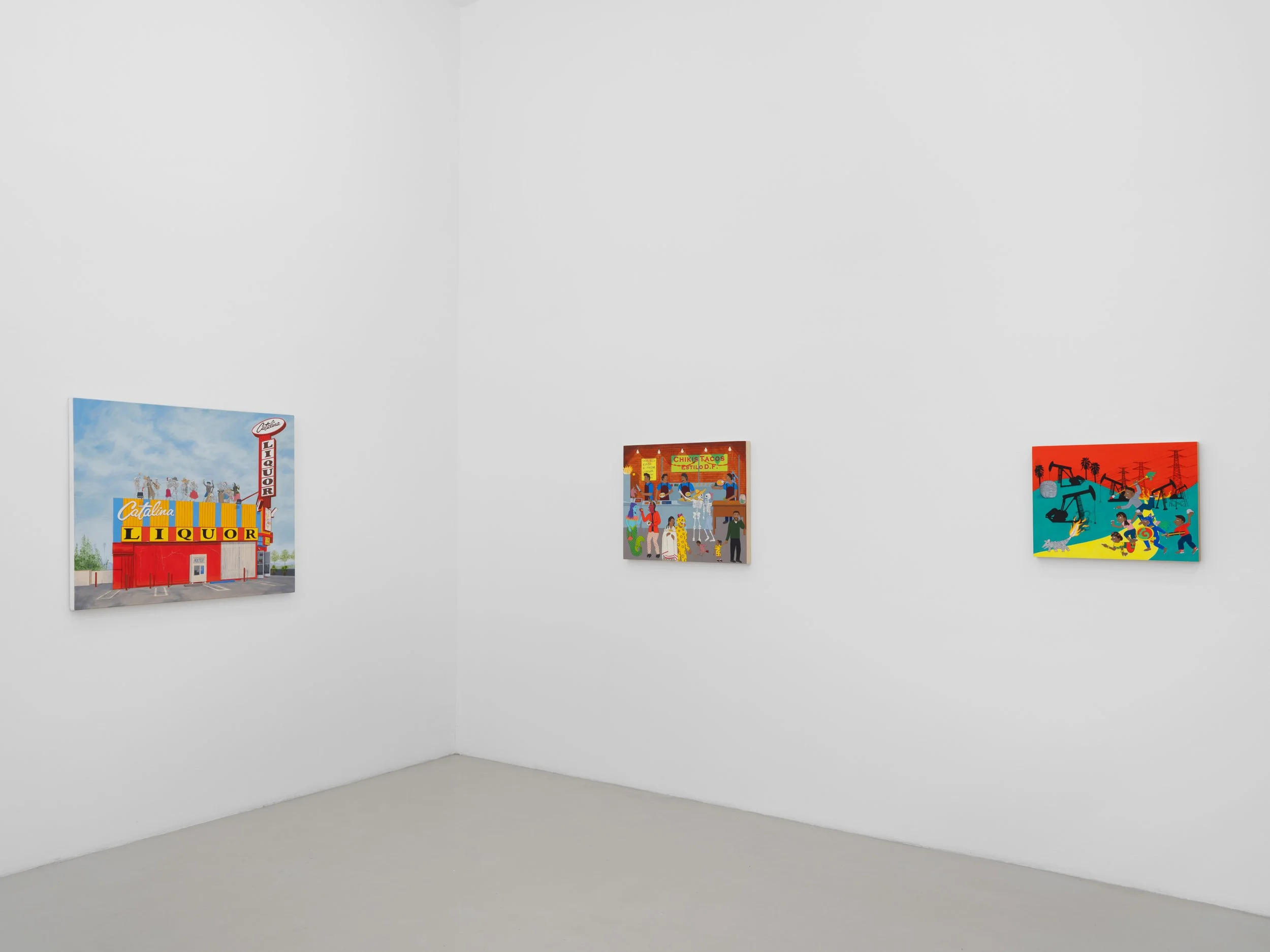
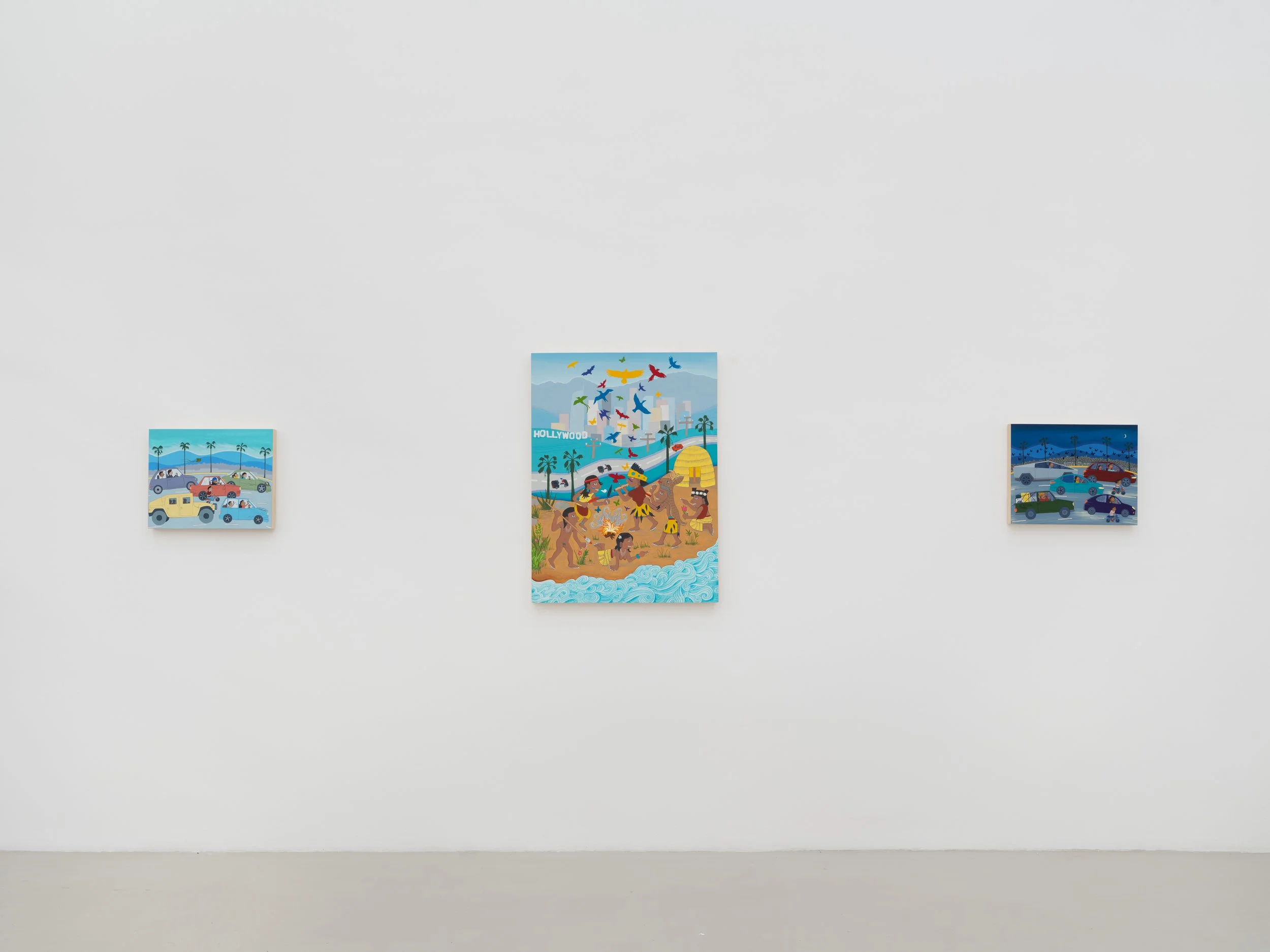
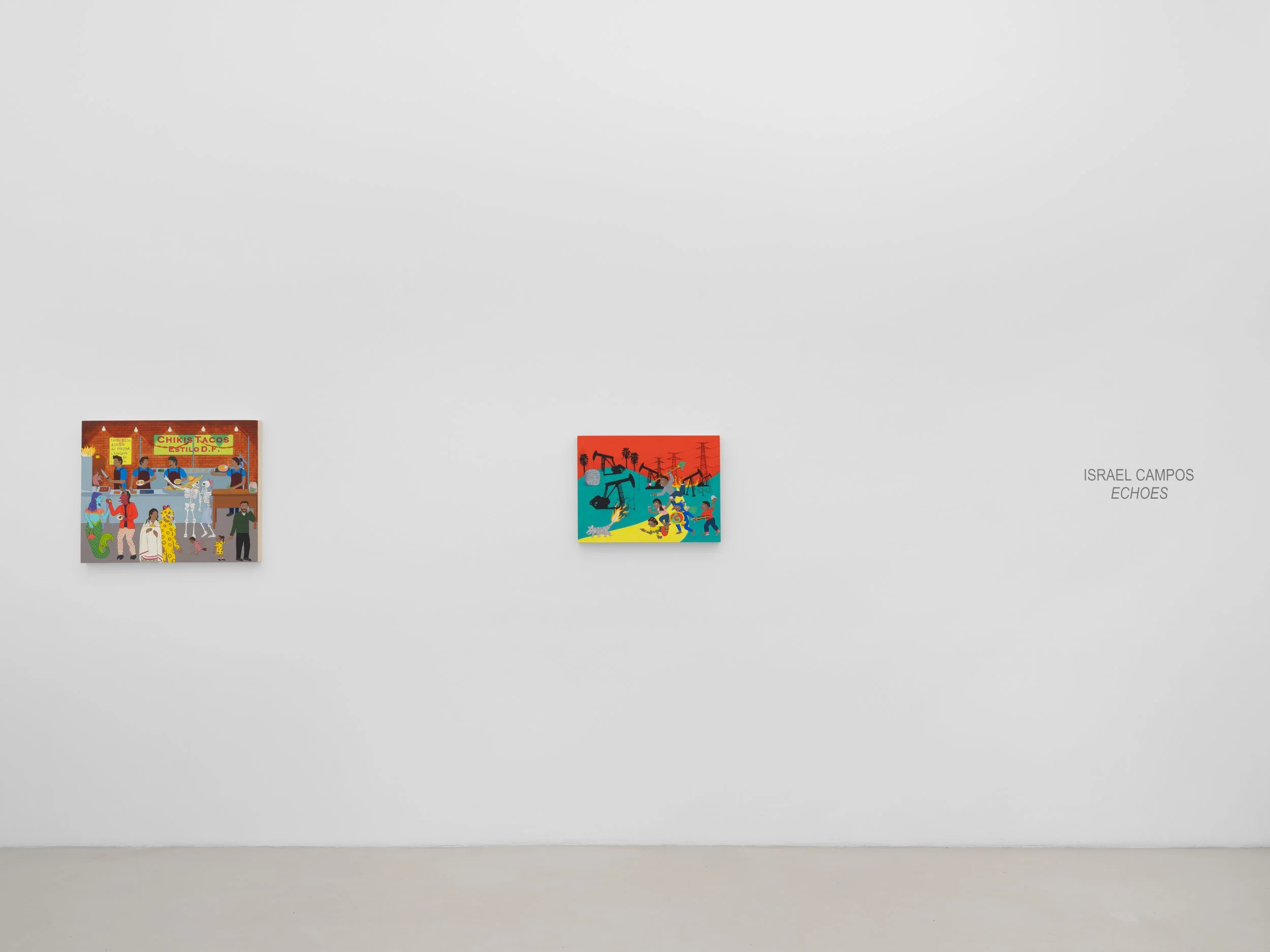
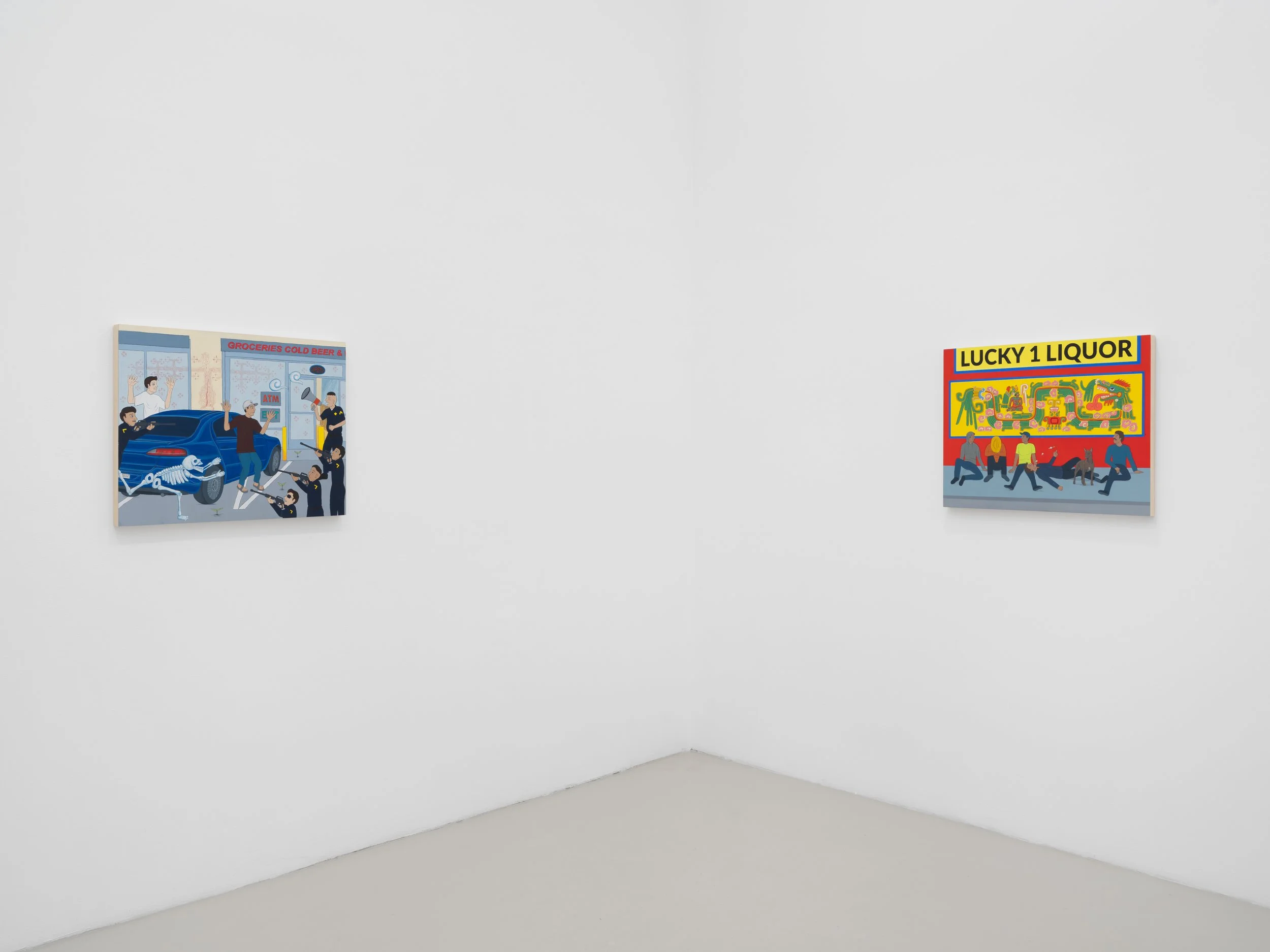
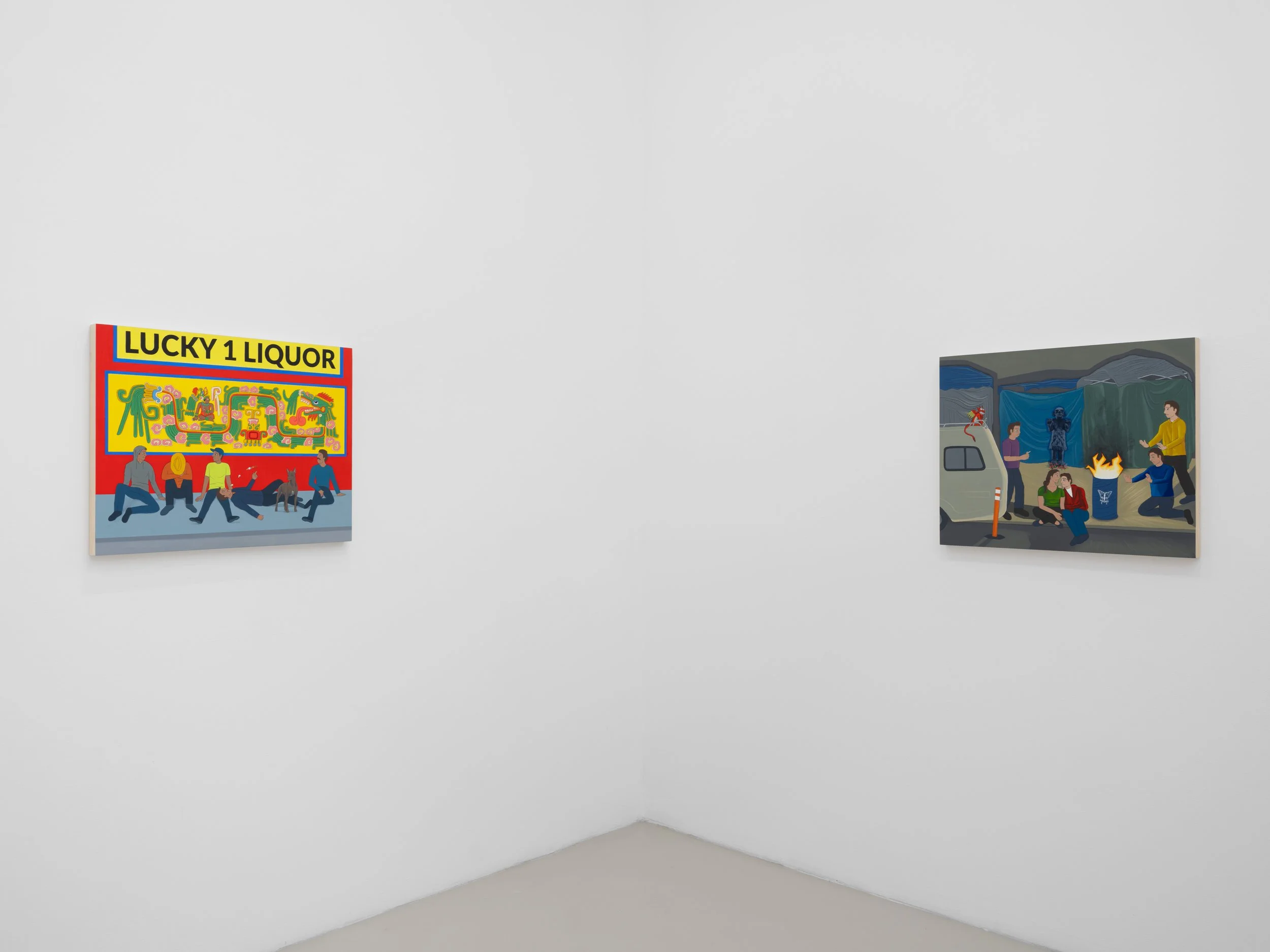
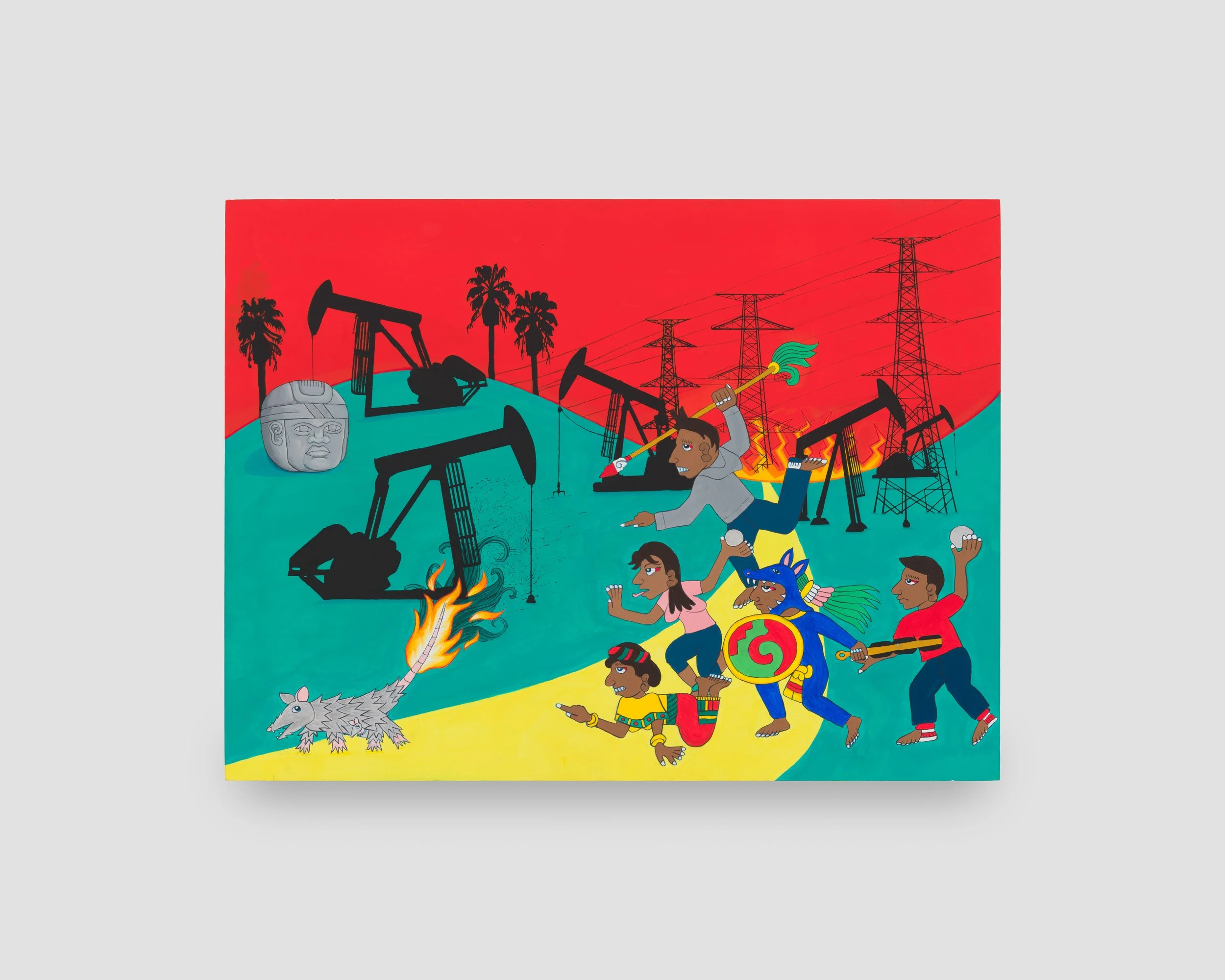
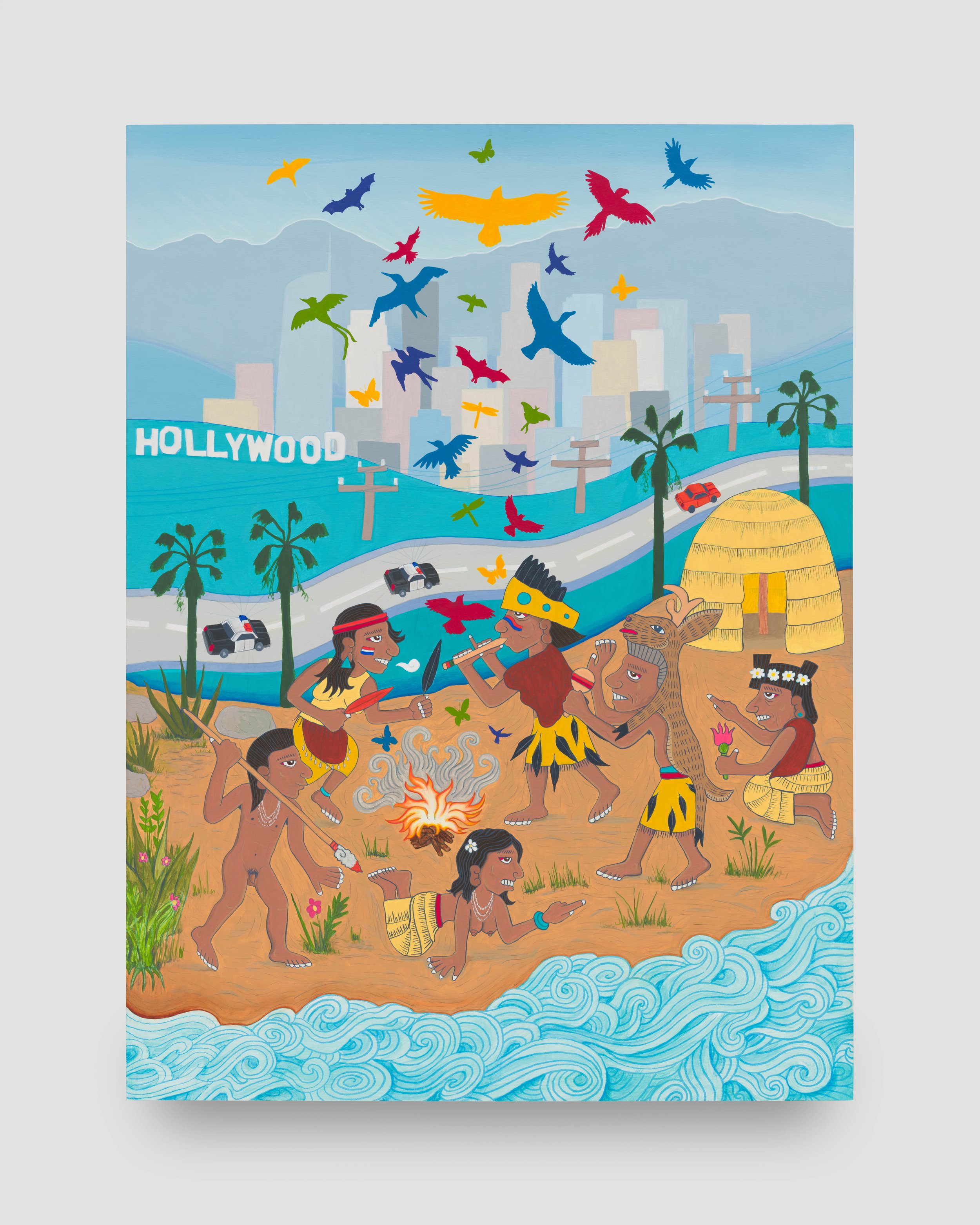
These paintings reveal the layers of history that undergird modern Los Angeles. Yaanga Lies Under the 101 imagines the city’s earliest Tongva inhabitants as they made their home on the land that, in the modern day, runs beneath the Hollywood Freeway. Campos’s process mimics this archaeological layering: each canvas begins with a screenprinted underlayer that is then painted over in acrylic, and then once again layered with screenprinted details. The screenprinting often lends the canvas its flat, stylized manner, as in Possum Brings Fire, where the stark linearity of the powerlines and girded towers are mirrored in the clear-cut shadow forms of the palm trees and pumpjacks that dot the landscape. These two works also tell parallel foundational stories. Like Prometheus, the possum of Mexican mythology stole fire from the gods and shared it with humanity Here he is hunted by a gang of warriors from across time – they wear feathered headdresses but also hoodies – as the spoils of his fiery gift range across the hills.
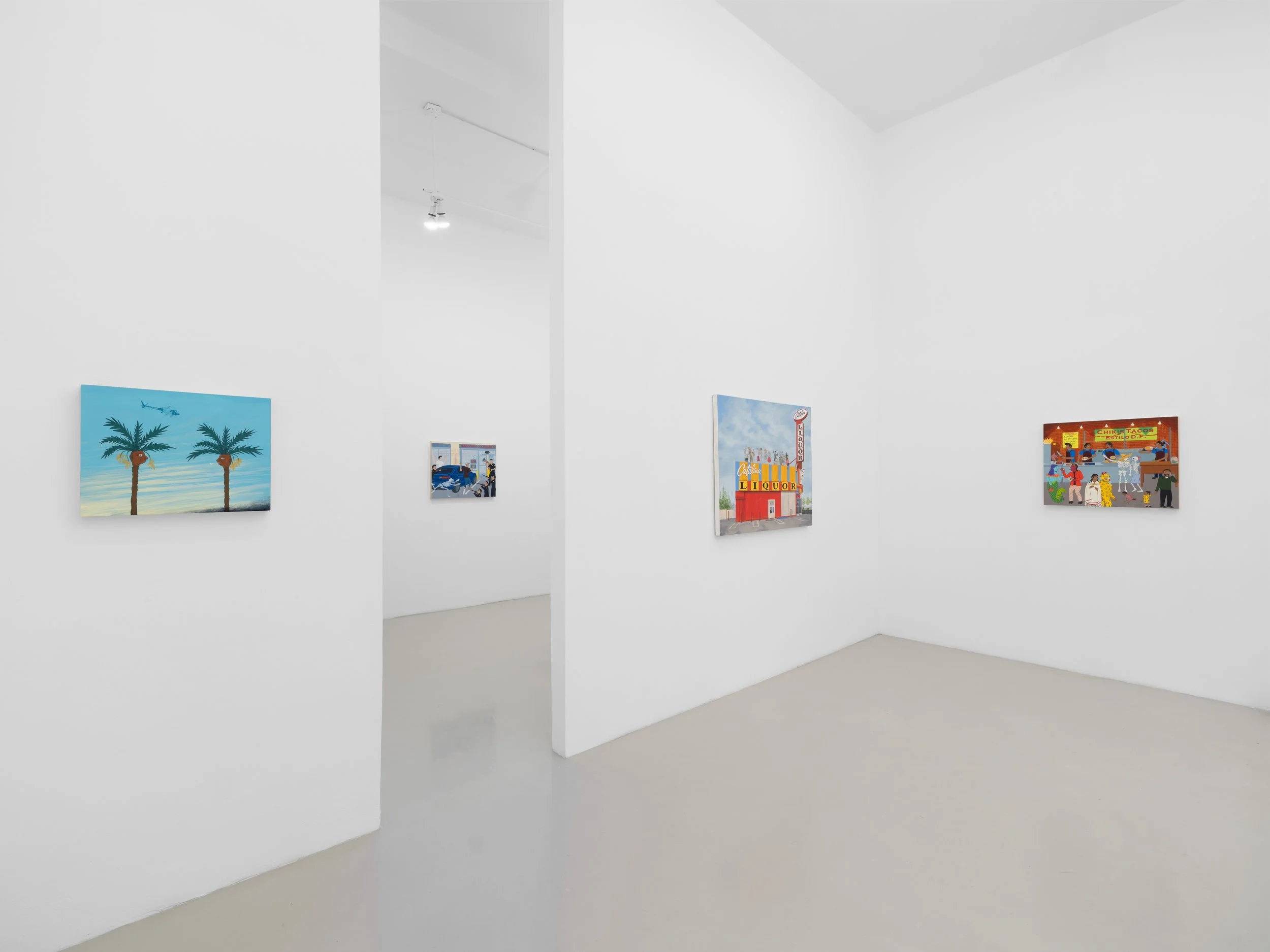
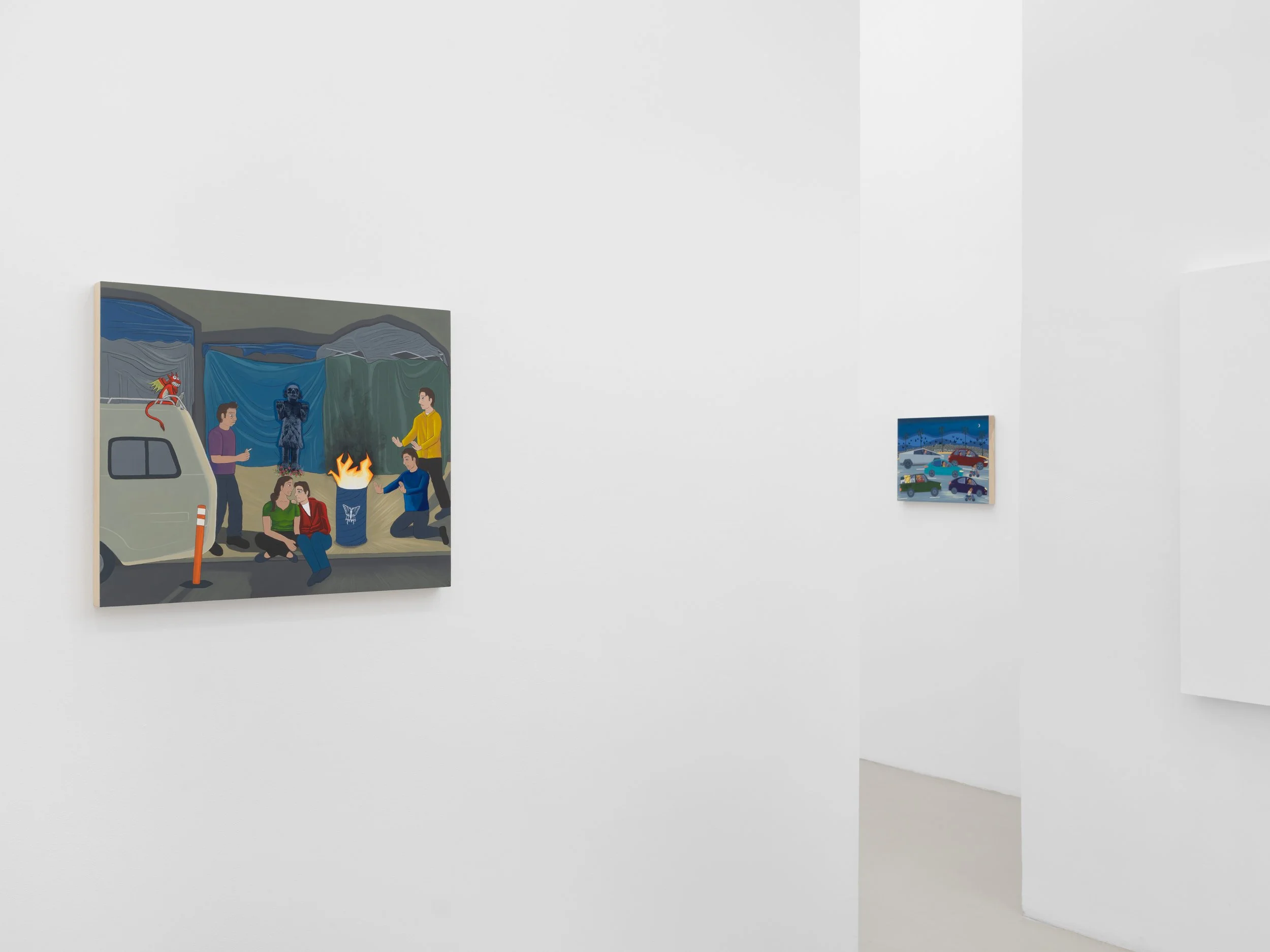
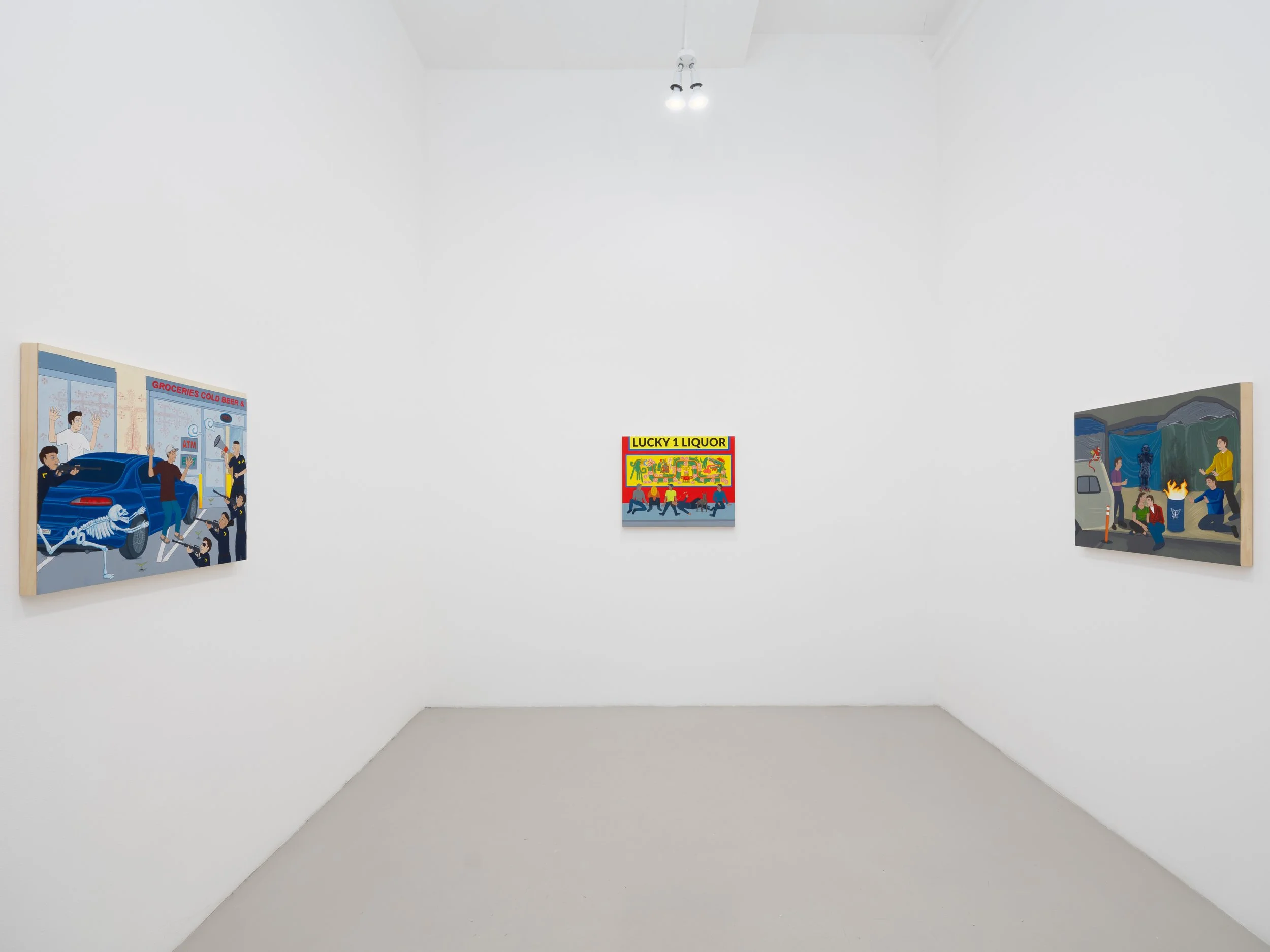
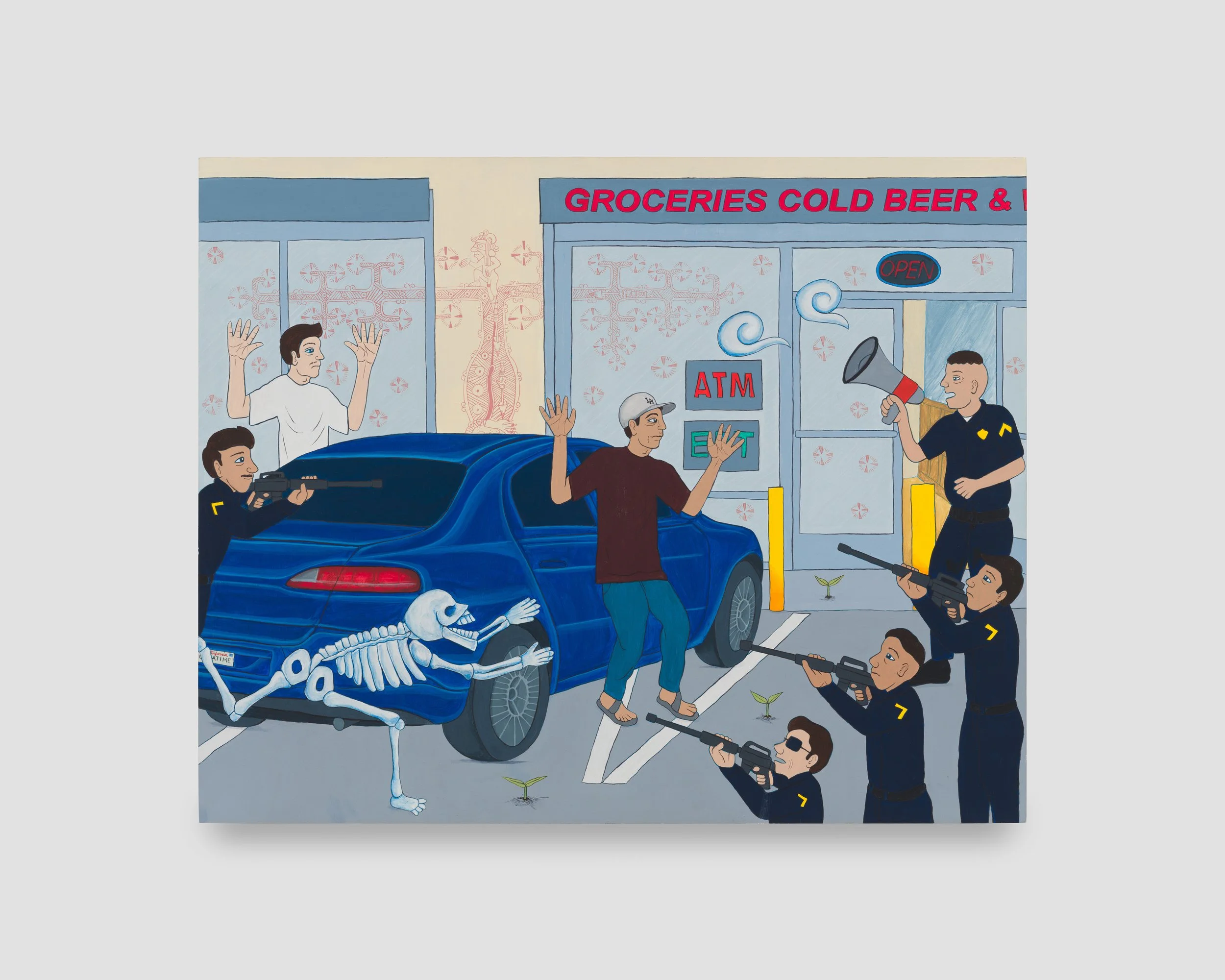
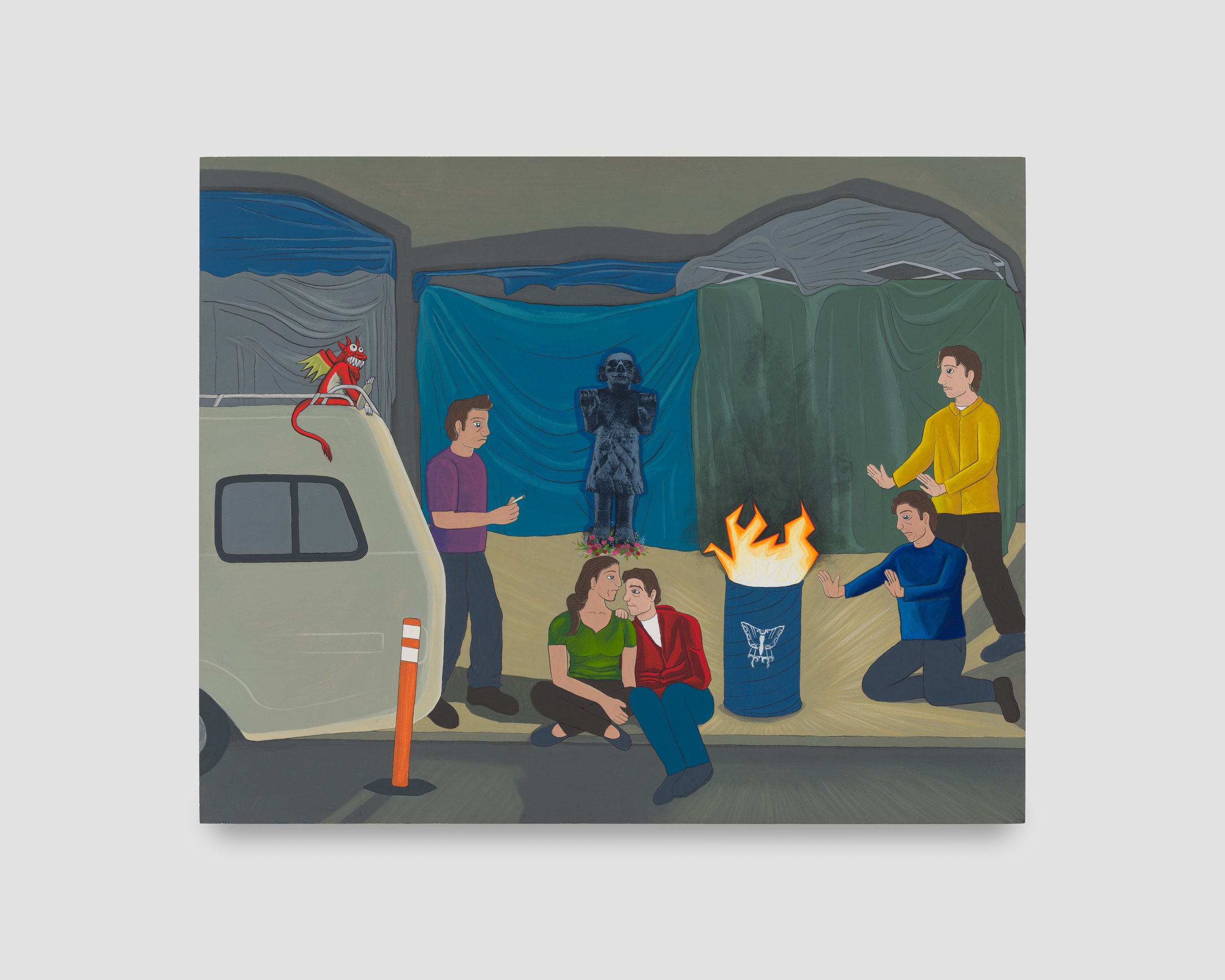
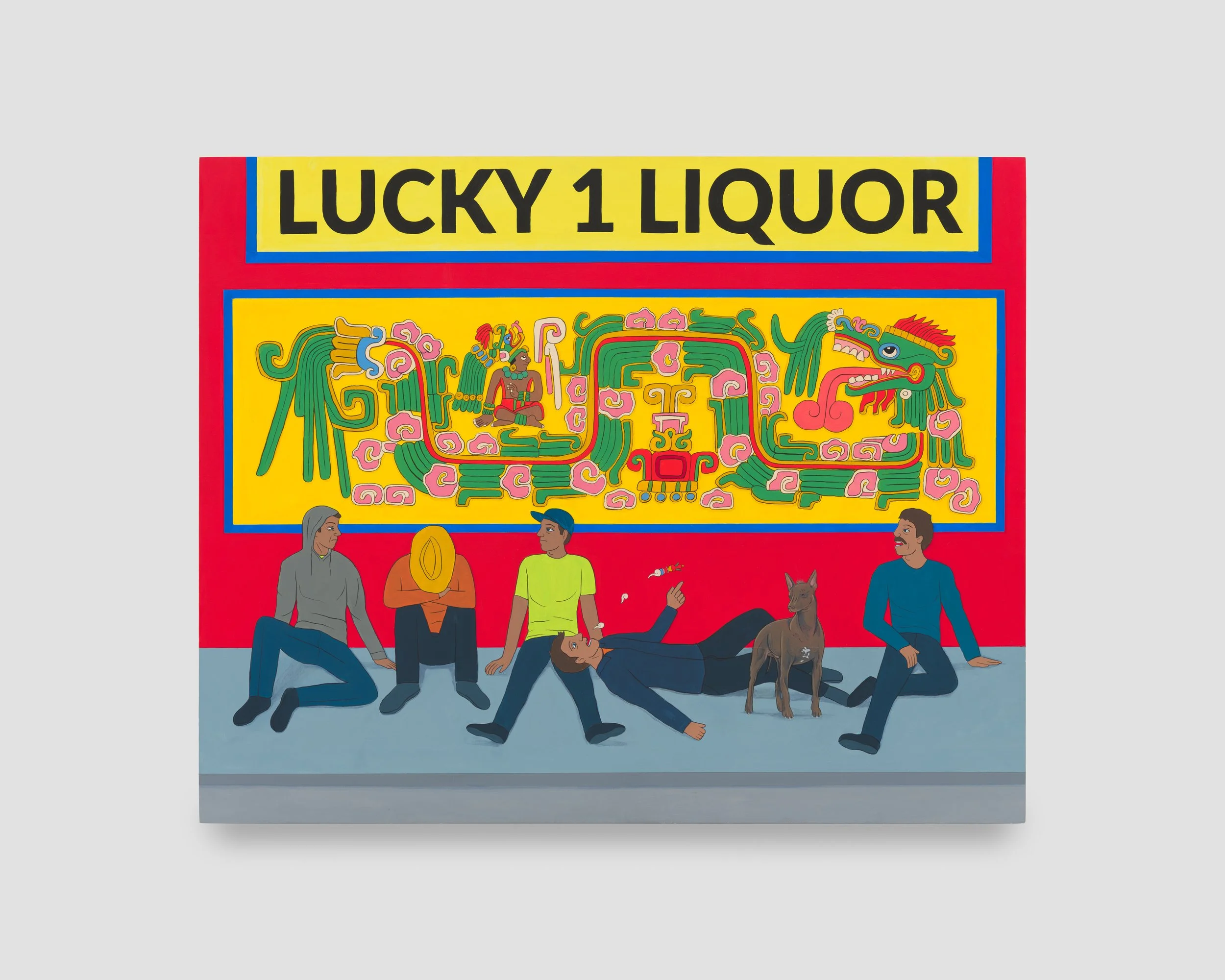
Elsewhere, the overlayer of screenprint envelops the works in ghostly echoes of history. Borrowed Time uses this technique to great effect, where a divine tree that birthed Mexican kings stretches across the building facade behind a charged encounter in a bodega parking lot. The veil is thin as death reaches out for the figure confronting a line of armed police. Campos often pulls imagery from historical sources, and this comes from the 14th century Codex Mexicanus I, a pre-Columbian Mixtec genealogical record. Lucky Ones features a large mural adapted from a stone relief on an ancient temple in the Mexican state of Morelos, one of the earliest depictions of Quetzalcoatl. The feathered serpent watches over the group arrayed across the sidewalk, a figure from their own ancestral history carried to a new and modern land. The flattened perspective and strong outlining of ancient Mesoamerican painting and sculpture inform Campos’s style, where most figures are seen from the side, speech manifests as curlicues of cloud, and the spirit world hovers near.
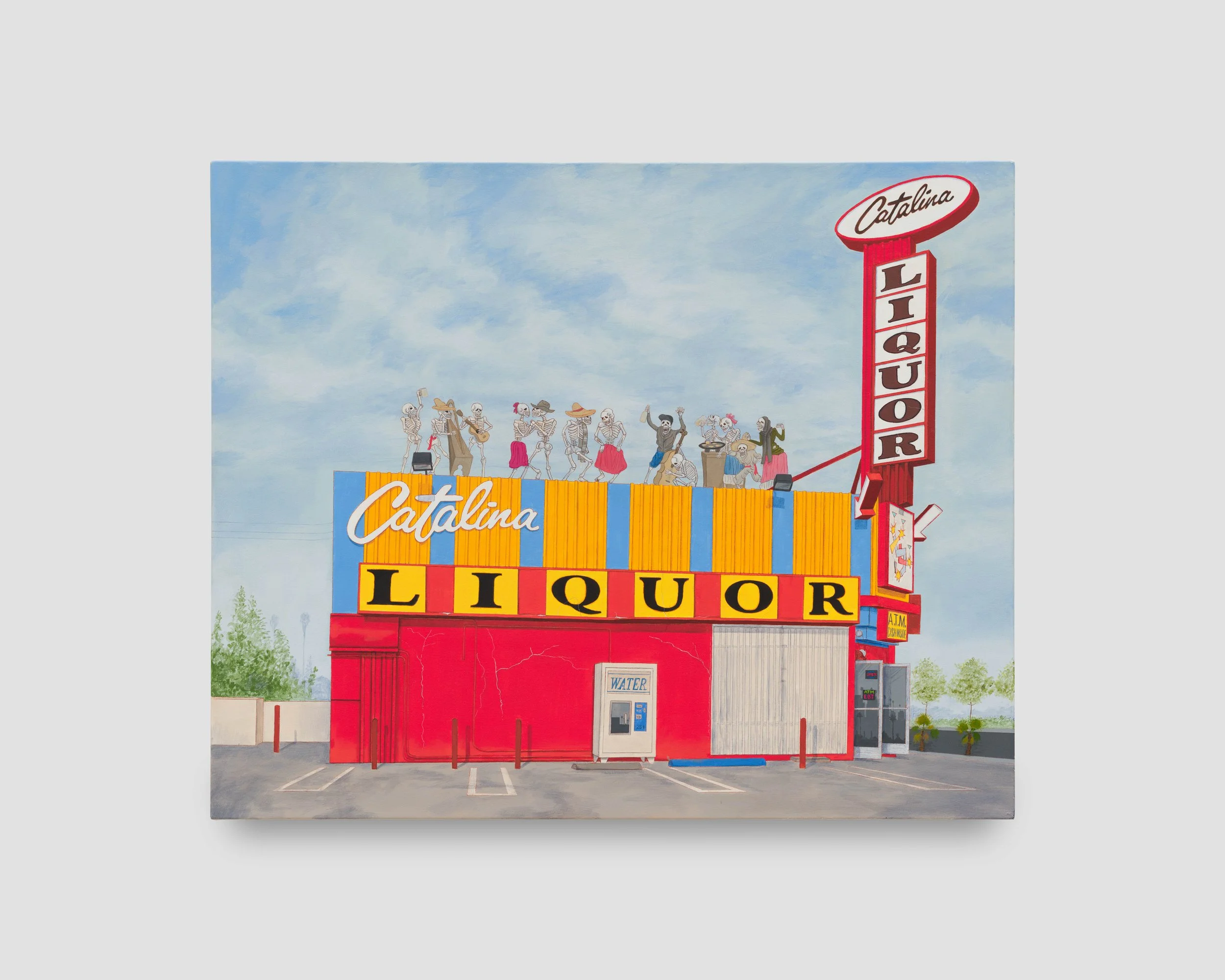
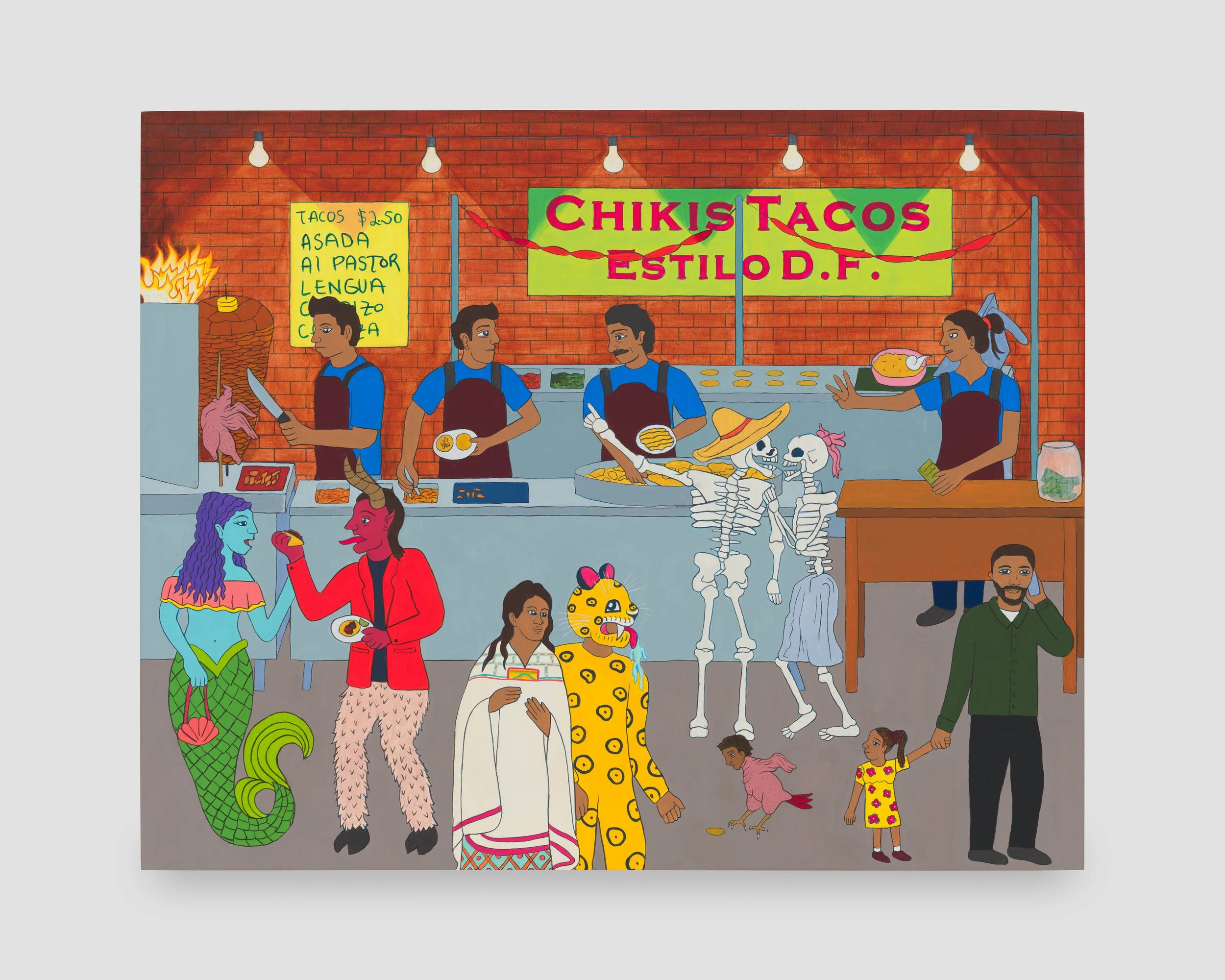
Nowhere is the spirit world nearer than in Chikis Tacos, a vibrant taco shop interior where patrons include hungry skeletons in sombreros and skirts, a blue mermaid flirting with a horned devil, and figures in robes and panther skins who could have stepped out of an Aztec painting. This spiritual comingling of ancient and modern Mexican folklore speaks to the cultural importance of legend and myth, and the ways in which Mexican culture is attuned to the supernatural within the everyday. This attachment to story is one of the ways in which culture survives migration, and in Campos’s works the spirits have made their home in Los Angeles alongside their mortal counterparts. The earliest work in the exhibition, Danza Macabre, shows a typically flamboyant midcentury Southern California liquor store that seemingly unknowingly plays host to a skeletal gathering in the style of Jose Guadalupe Posada.
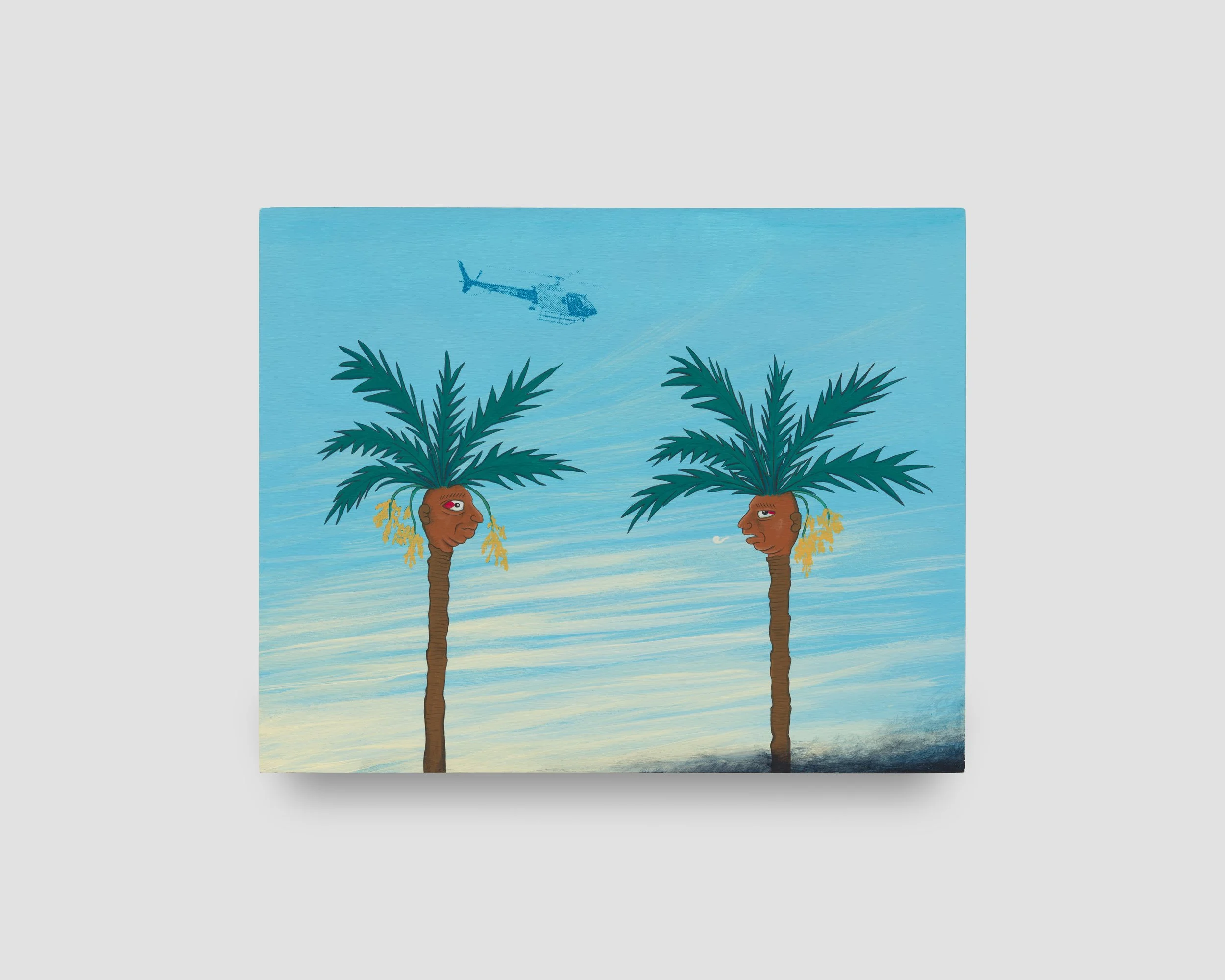
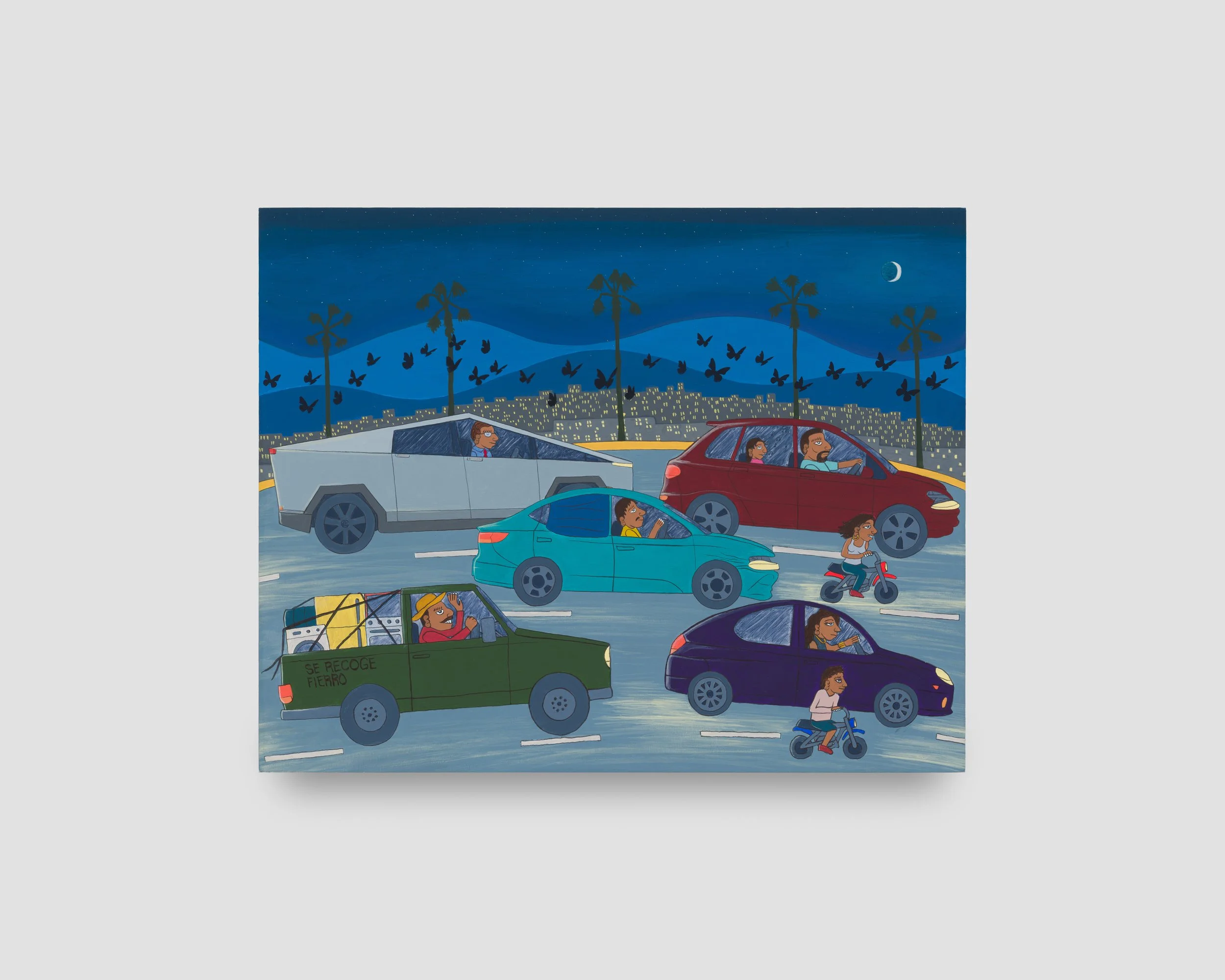
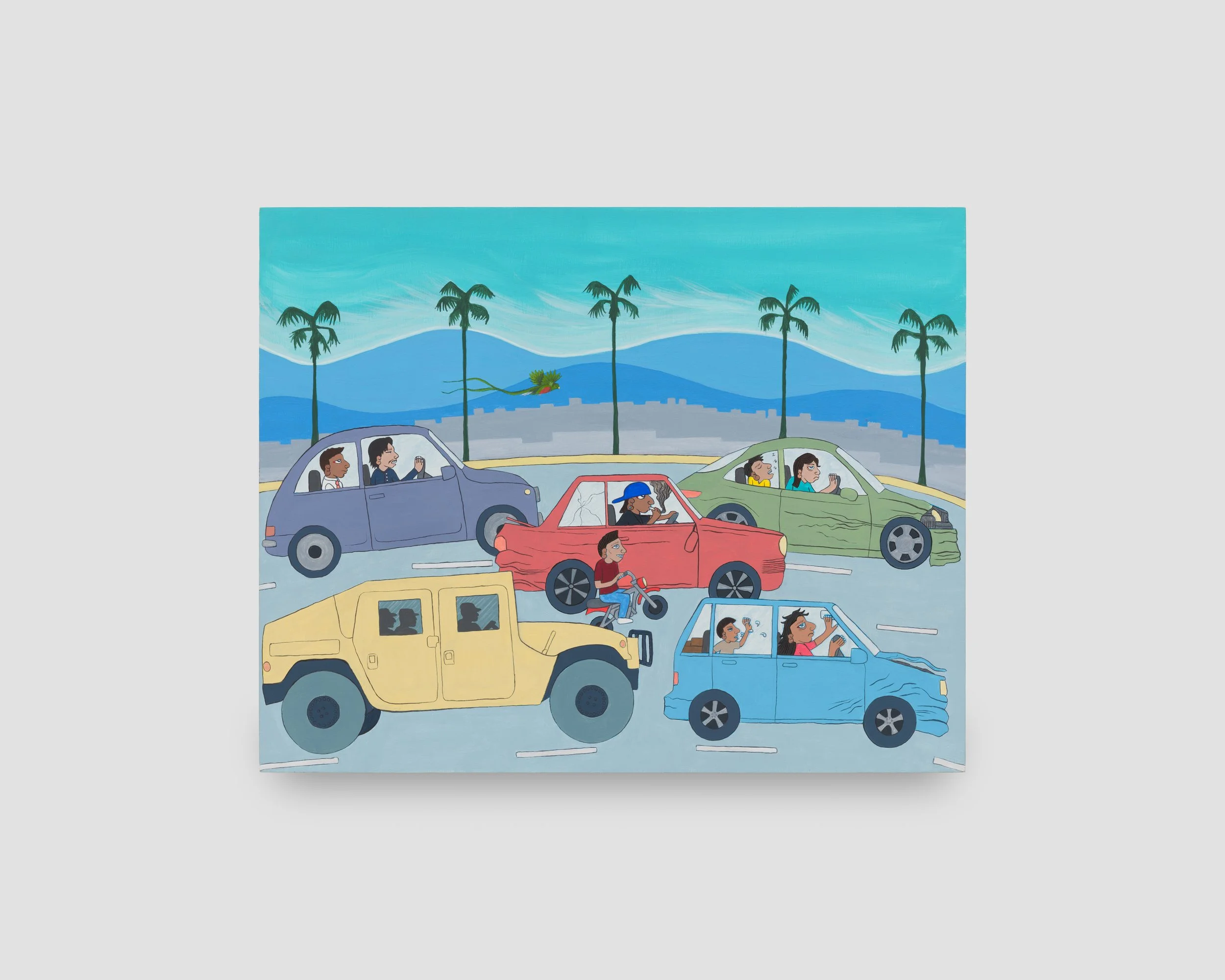
Whether delving into ancient history or immortalizing the corner store, Campos works with a specificity that locates his work squarely in Los Angeles. His keen observations allow him to distill the city into component parts that speak to larger ideas about the lived realities of its inhabitants. Black Smoke Rising combines LA’s ubiquitous palm trees, here reimagined as a pair of old gossips, with the city’s ever-present police helicopters, set against a blue Southern California sky just starting to fill with thick fire smoke. A pair of traffic paintings – Quetzal Over the 105 and Monarchs Over the 110 – illustrate the tedious commutes of many Angelenos, but their various vehicles reveal different experiences. Expensive cybertrucks and ominous humvees share lanes with the beat-up cars that evidence economic struggles. Yet both paintings maintain a sense of wonder and history through connection with the natural world, as both monarchs and quetzals migrate across the US-Mexico border.
Israel Campos is an interdisciplinary L.A. based artist that works with paintings, print media, digital media, and artist books. His work embraces the art tradition of Mesoamerica to explore how historical events are interconnected and reverberate into the present. He graduated with a bachelor’s degree from the University of California, Santa Cruz in 2011 and with an MFA from the University of Wisconsin, Madison in 2015. His work is in the permanent collections of the Kohler Art Library in Madison, Wisconsin, the Oakland Museum of California, the Bancroft Library at the University of California, Berkley, and more. He has exhibited in venues across the country including the Oakland Museum of California, Tiger Strikes Asteroid in Greenville, SC, 2nd Story in Lexington, KY, and more. He is Assistant Professor of Printmaking at Loyola Marymount University and on the Board of Directors for the California Society of Printmakers. He also runs and operates Chayote Press which is based in the Pico Union neighborhood of Los Angeles.
Selected Works
Installation