Left in Ruins
Patrick Martinez
Left in Ruins
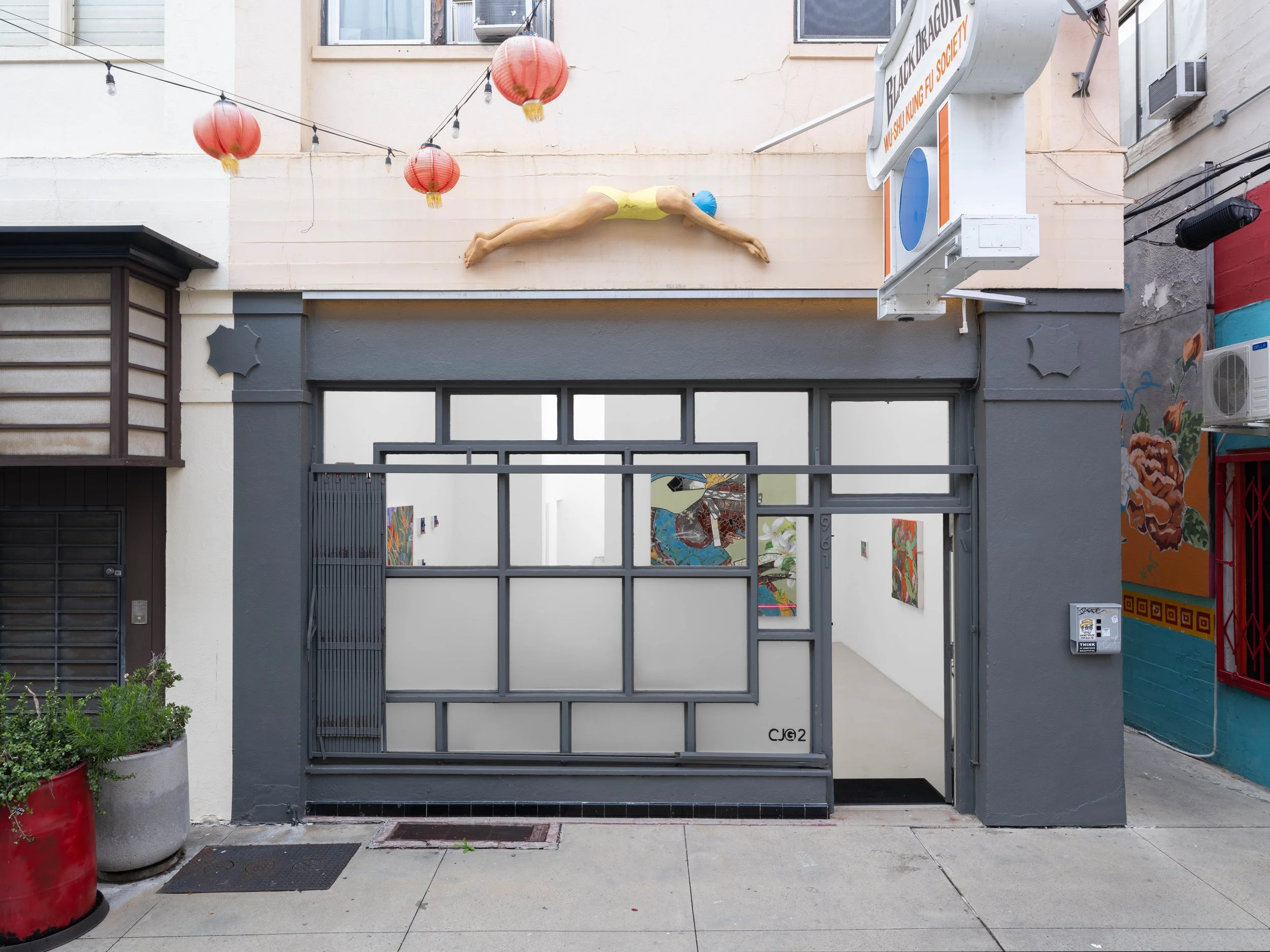
969 + 961 Chung King Road
february 20 - April 11, 2026
OPENING RECEPTION: friday February 20, 5-8pm
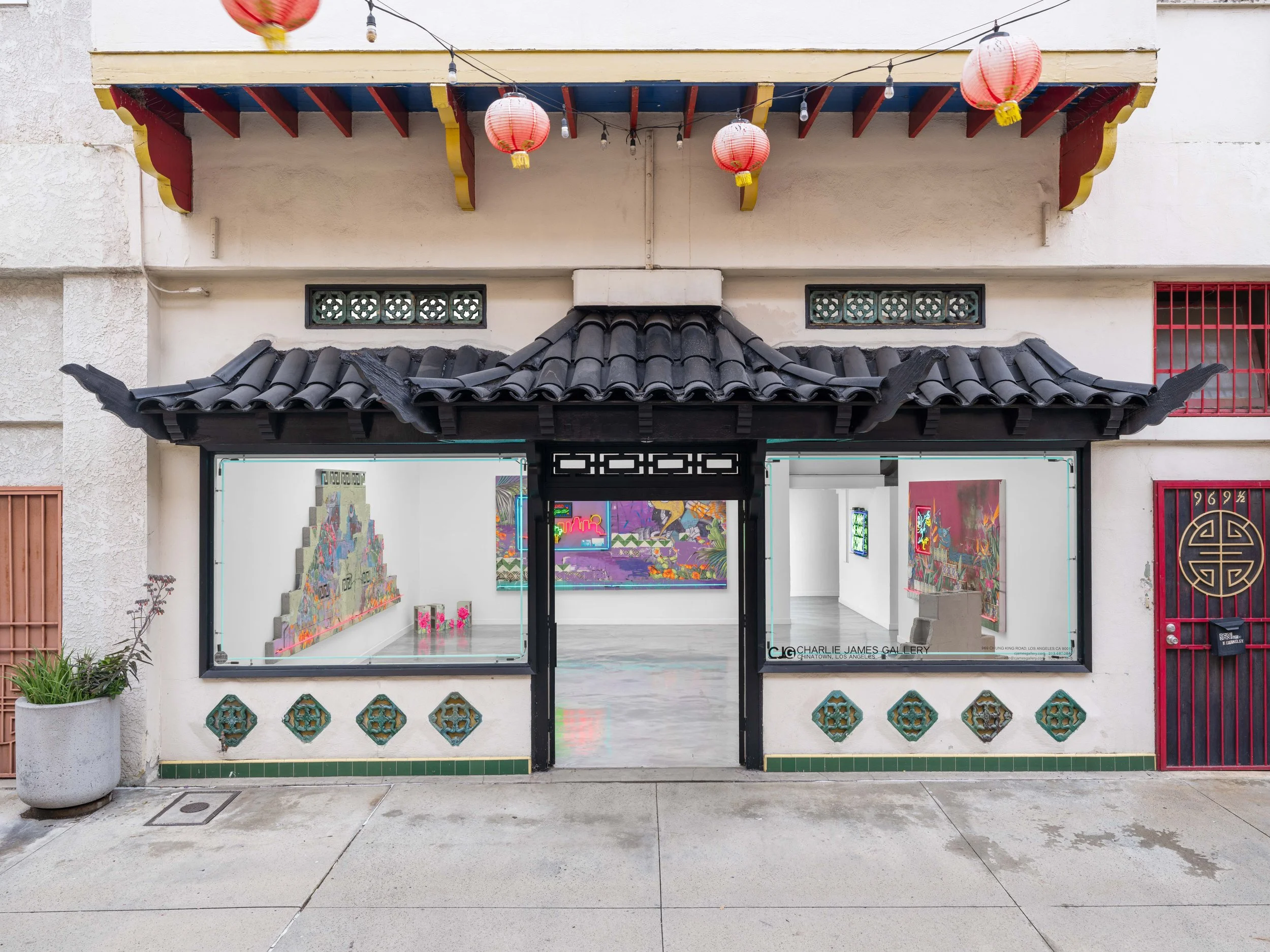
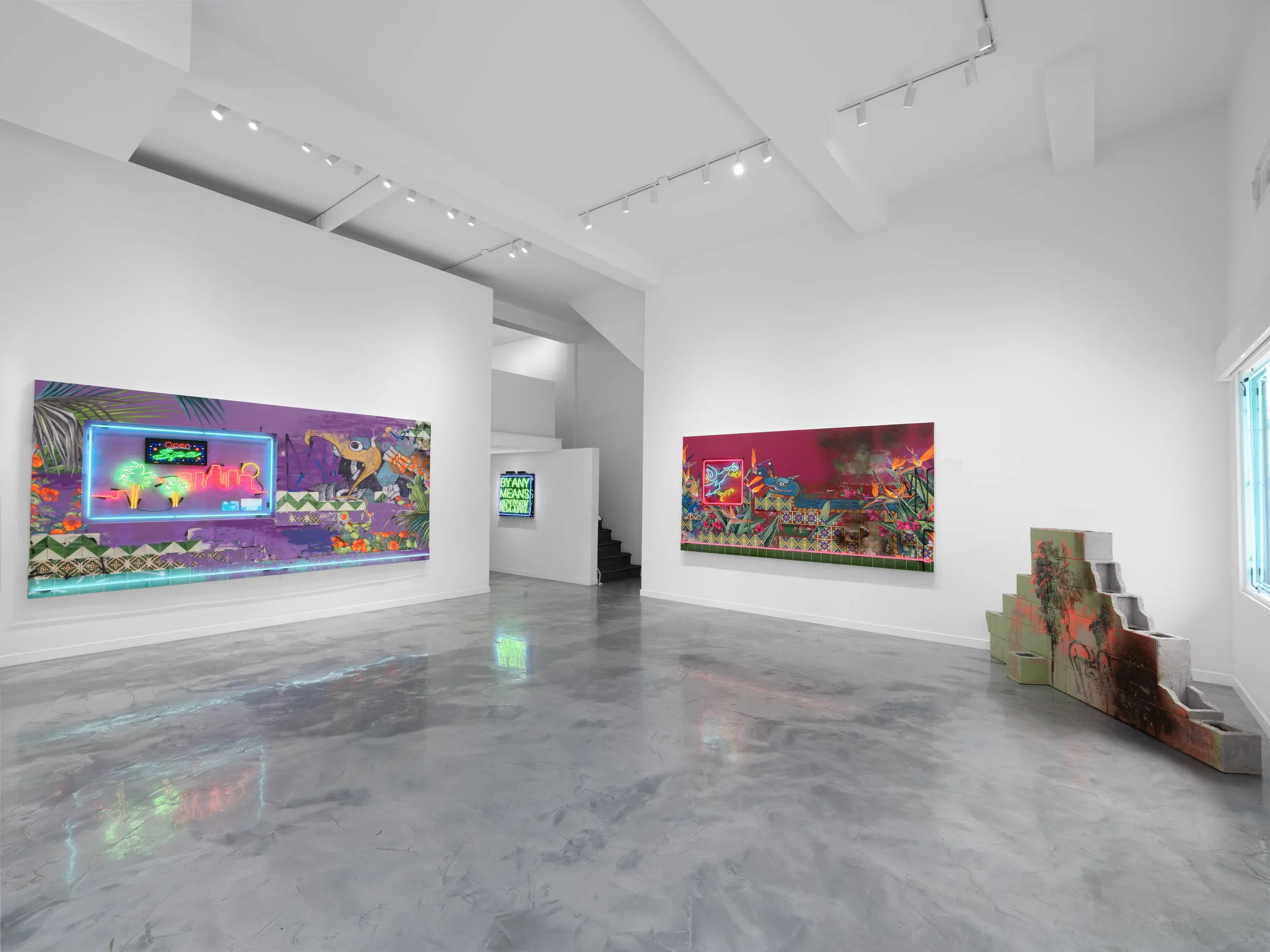
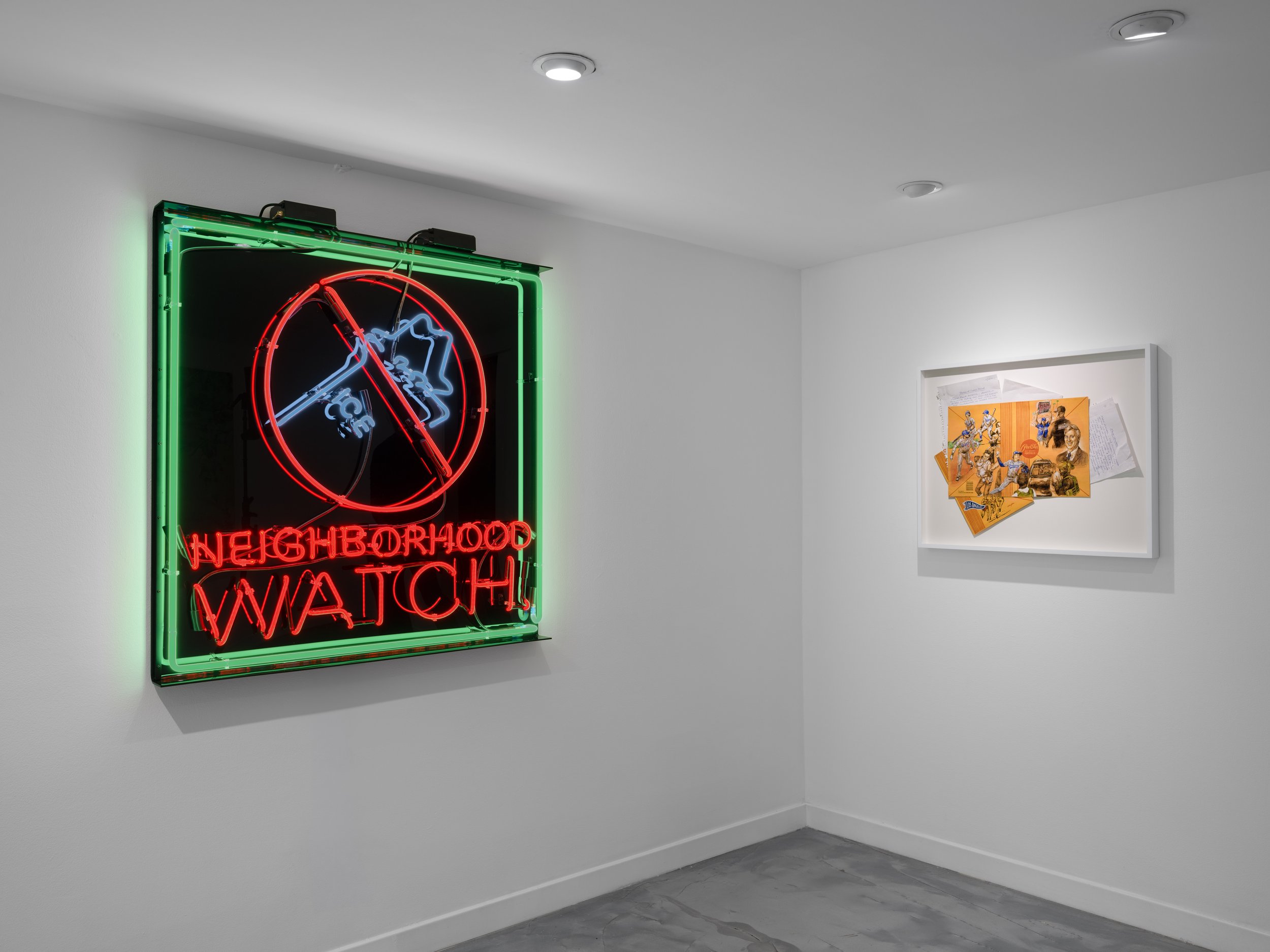
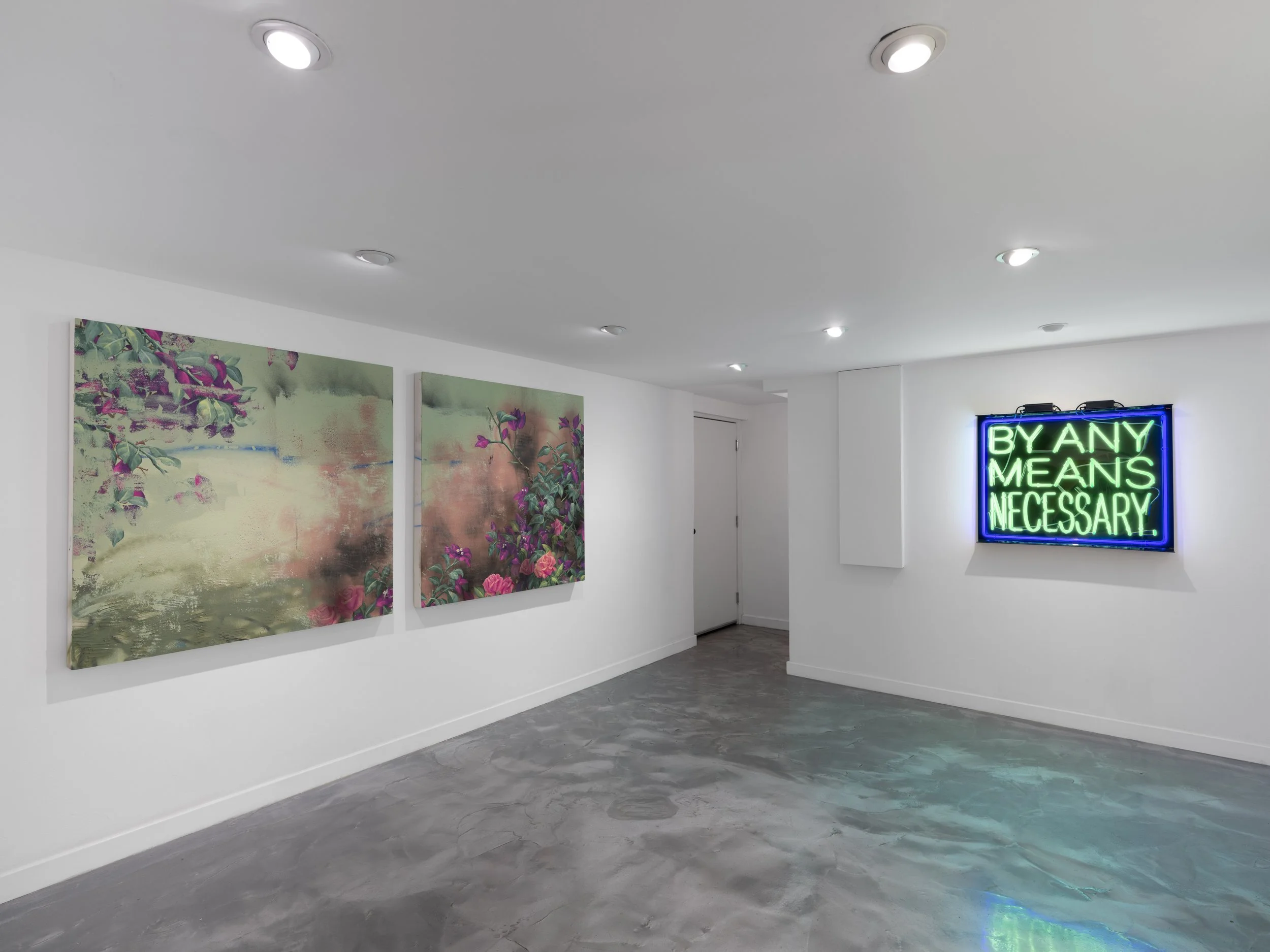
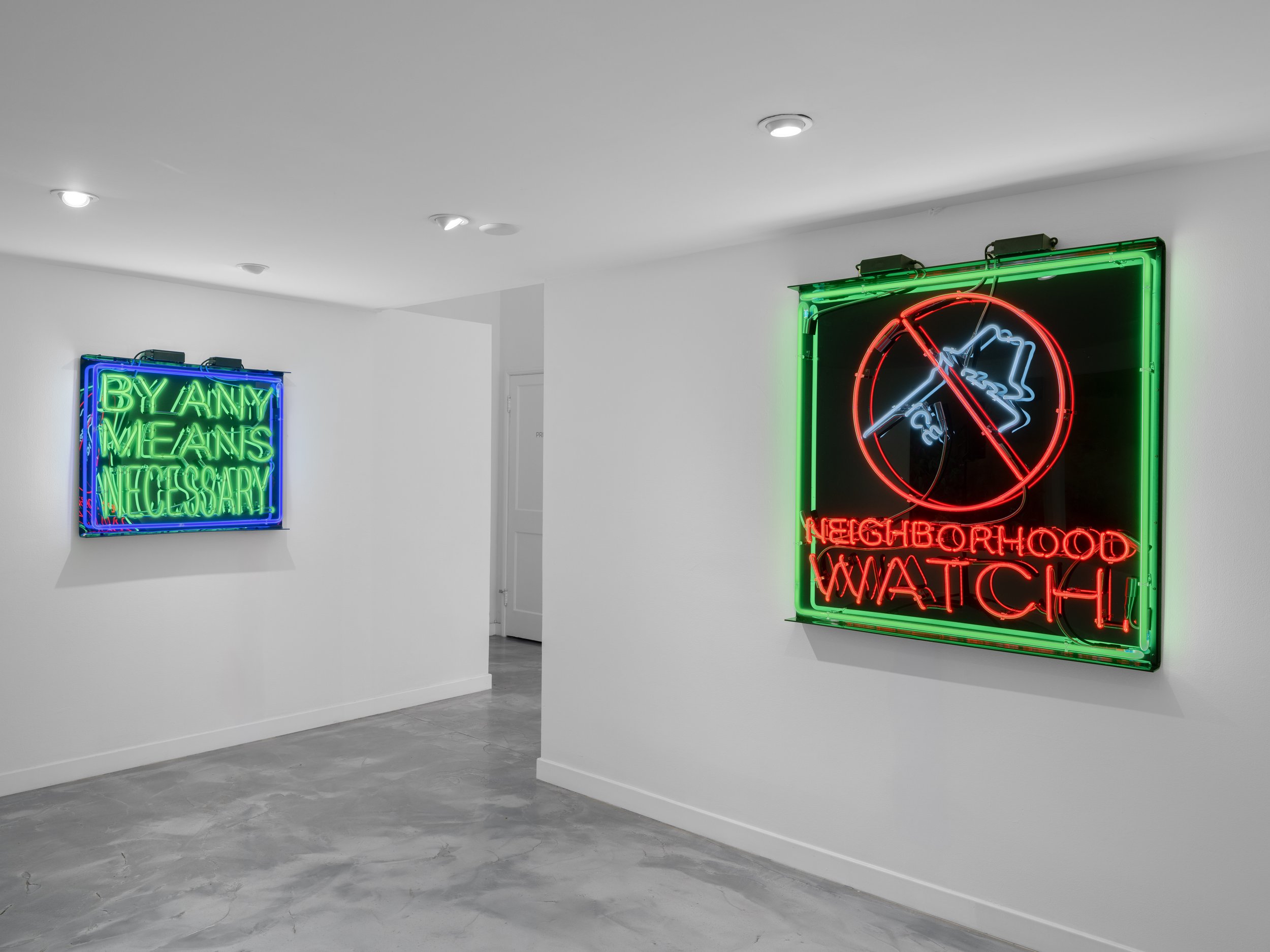
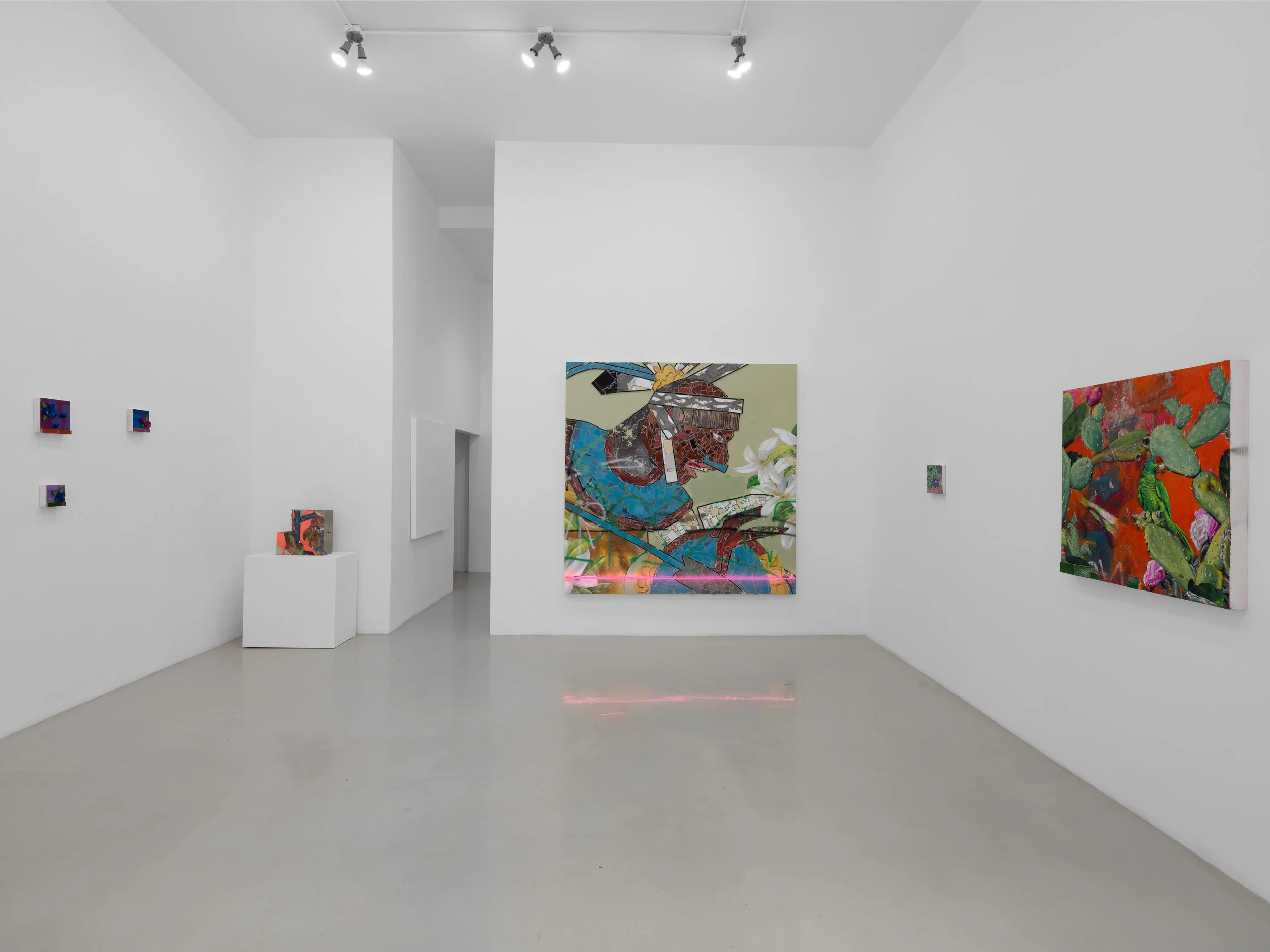
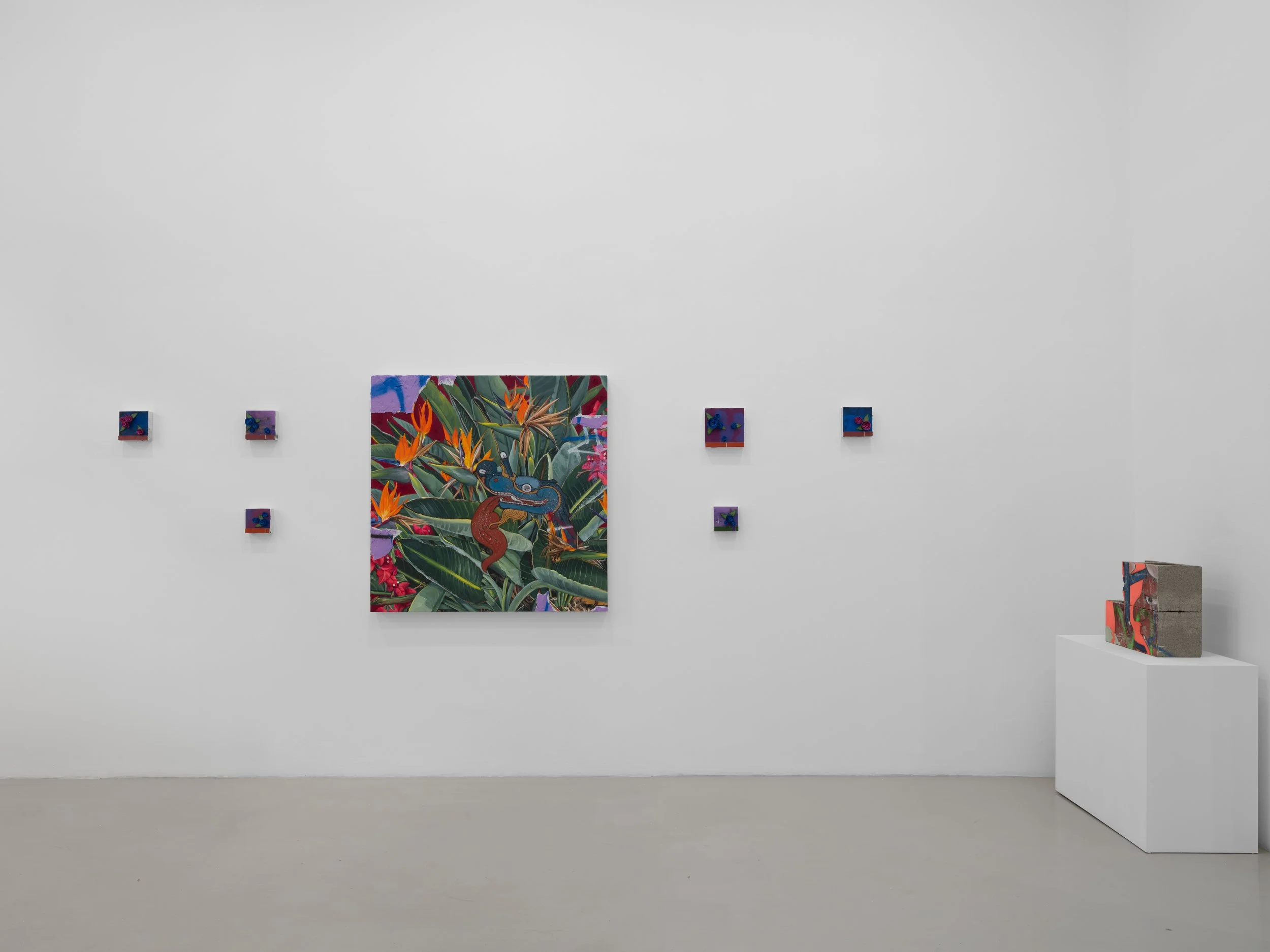
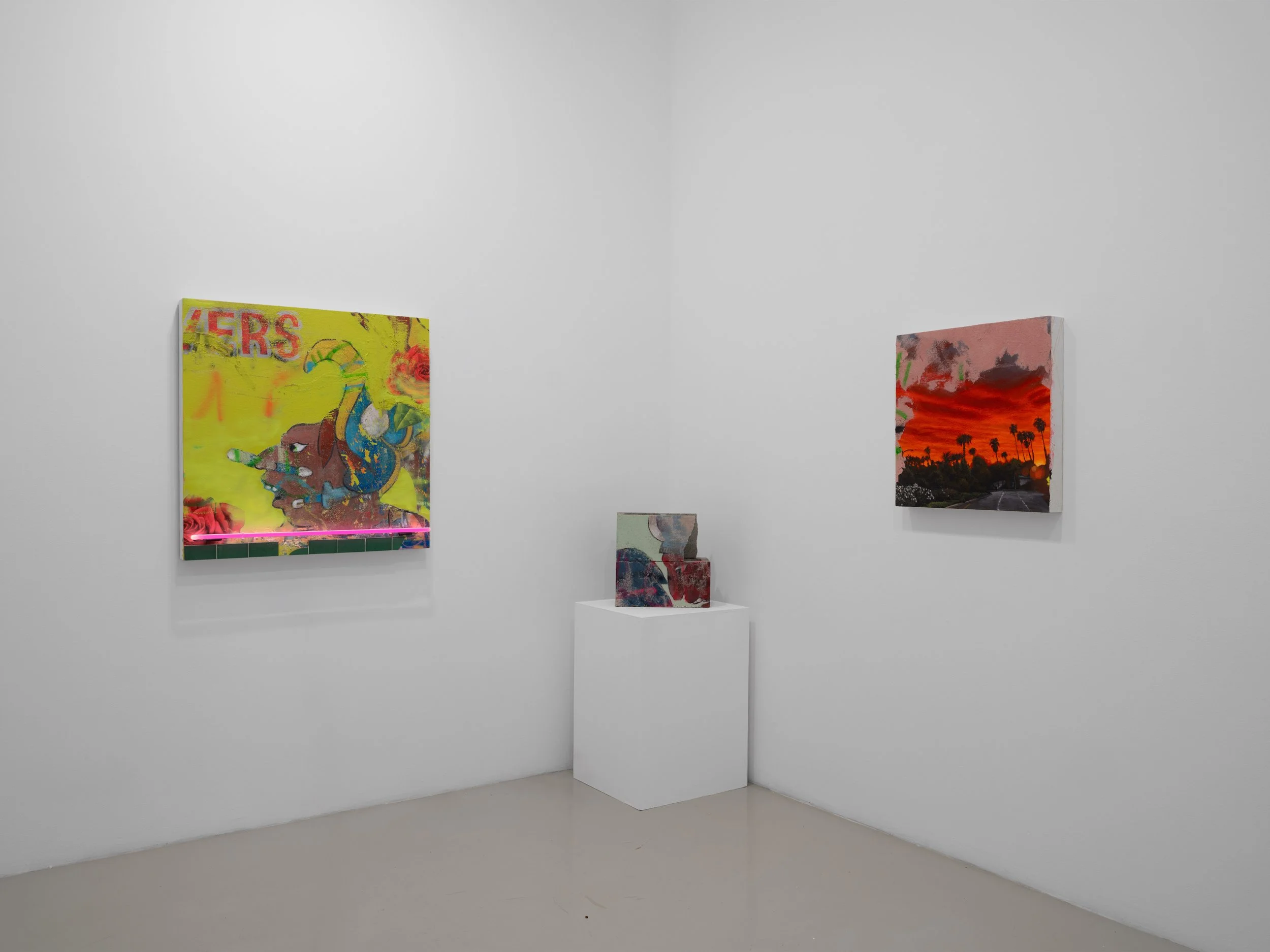
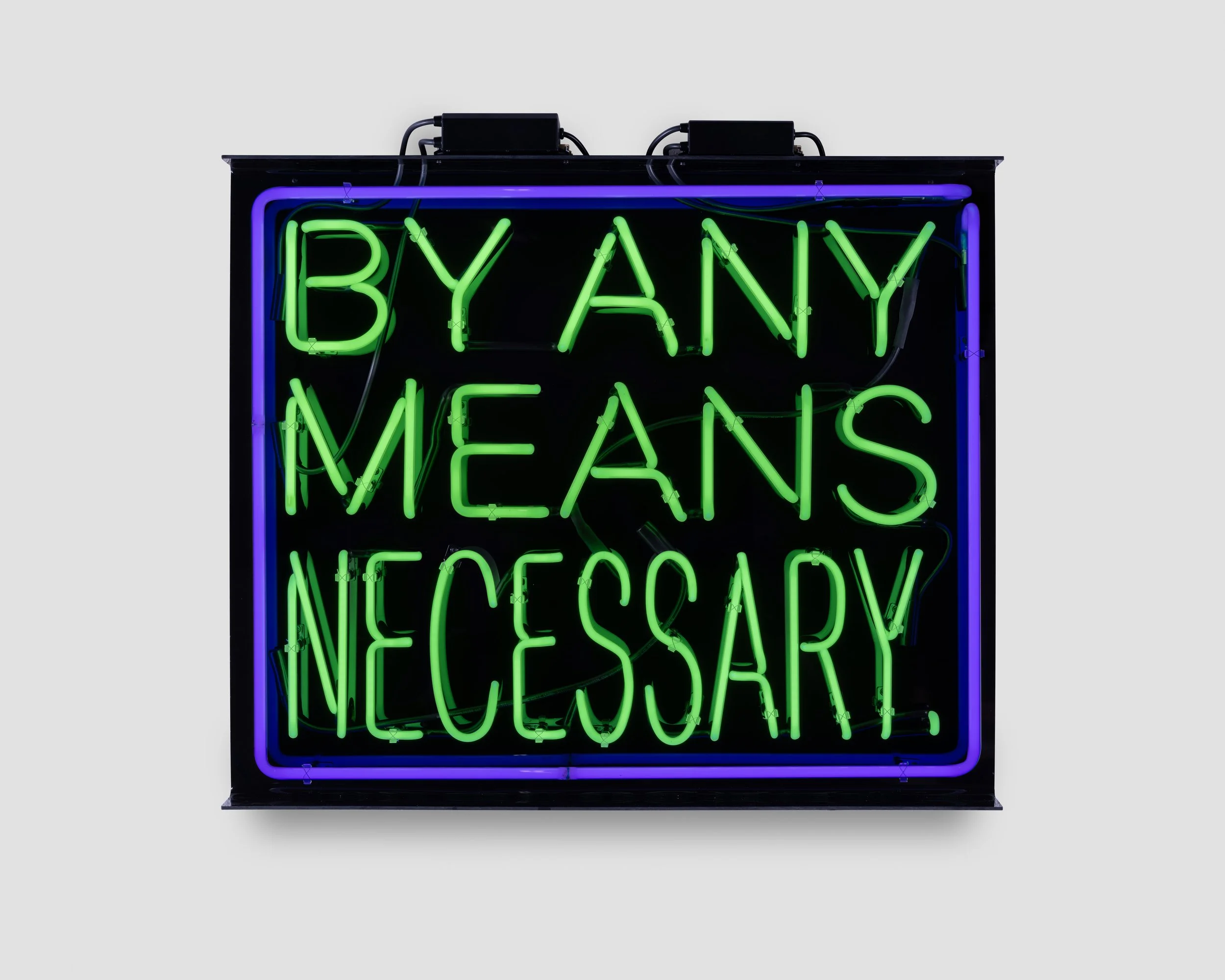
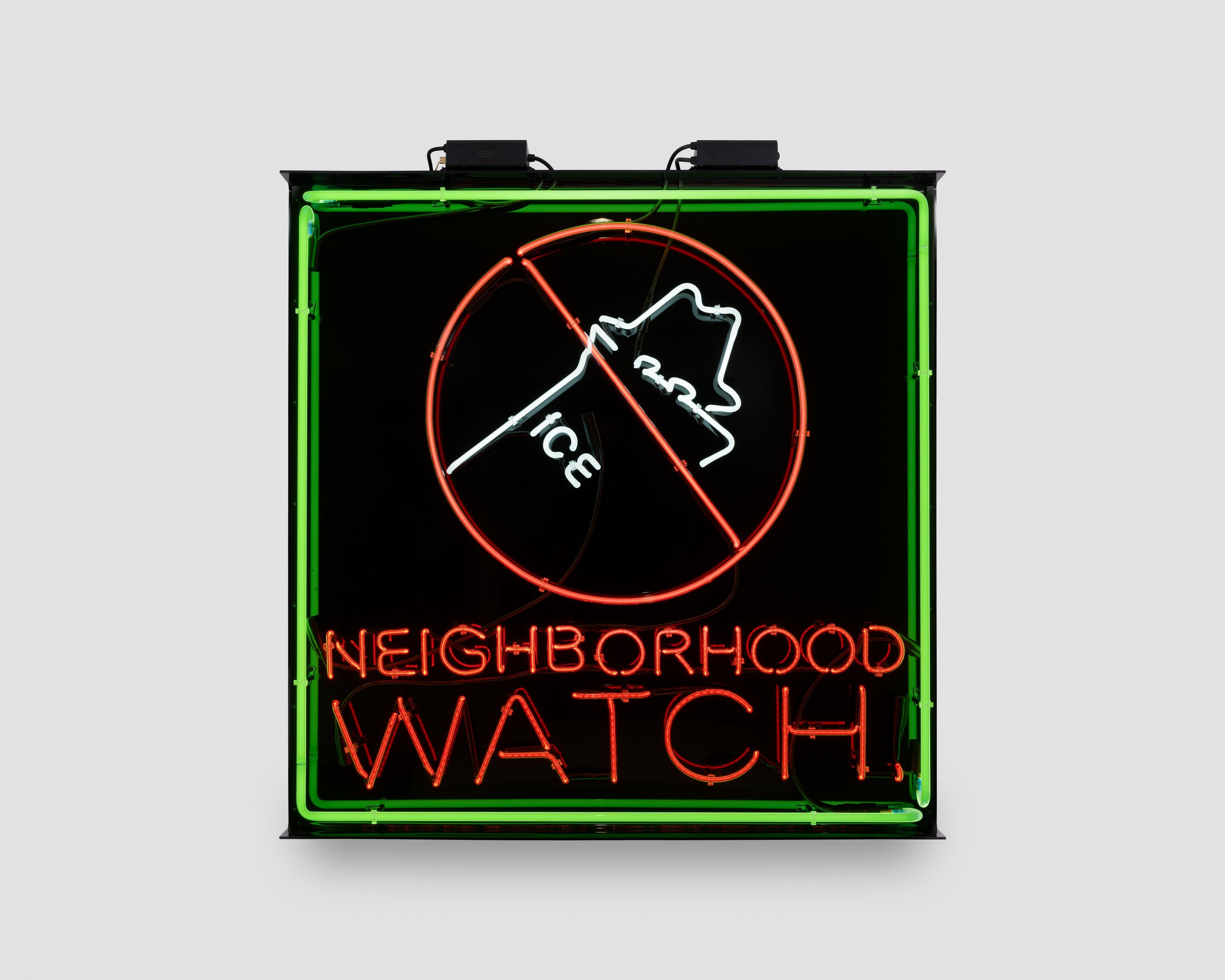
Charlie James Gallery is proud to present Patrick Martinez: Left in Ruins, an exhibition of new paintings, drawings, sculptures, and neons by the Los Angeles artist, his fourth with the gallery. The works in this exhibition were created over the last two years and represent the culmination of the artist’s formal experimentation and thematic distillation reaching back nearly a decade. Martinez works at the scale of the city, using the Los Angeles landscape as material and medium. His interest falls equally on the city’s edenic flora and its ubiquitous signage; its promise of paradise and its oft-crumbling reality. This layered consideration of Los Angeles as subject manifests in works that encompass histories of migration and mark-making, architecture and activism, that are immediately familiar yet exhilaratingly original. Concurrently with this exhibition, Martinez will present a site-specific installation at Frieze Los Angeles, where six neon works will be installed in the fair’s entrance hall that directly and emphatically confront the recent kidnappings by ICE agents across the country.
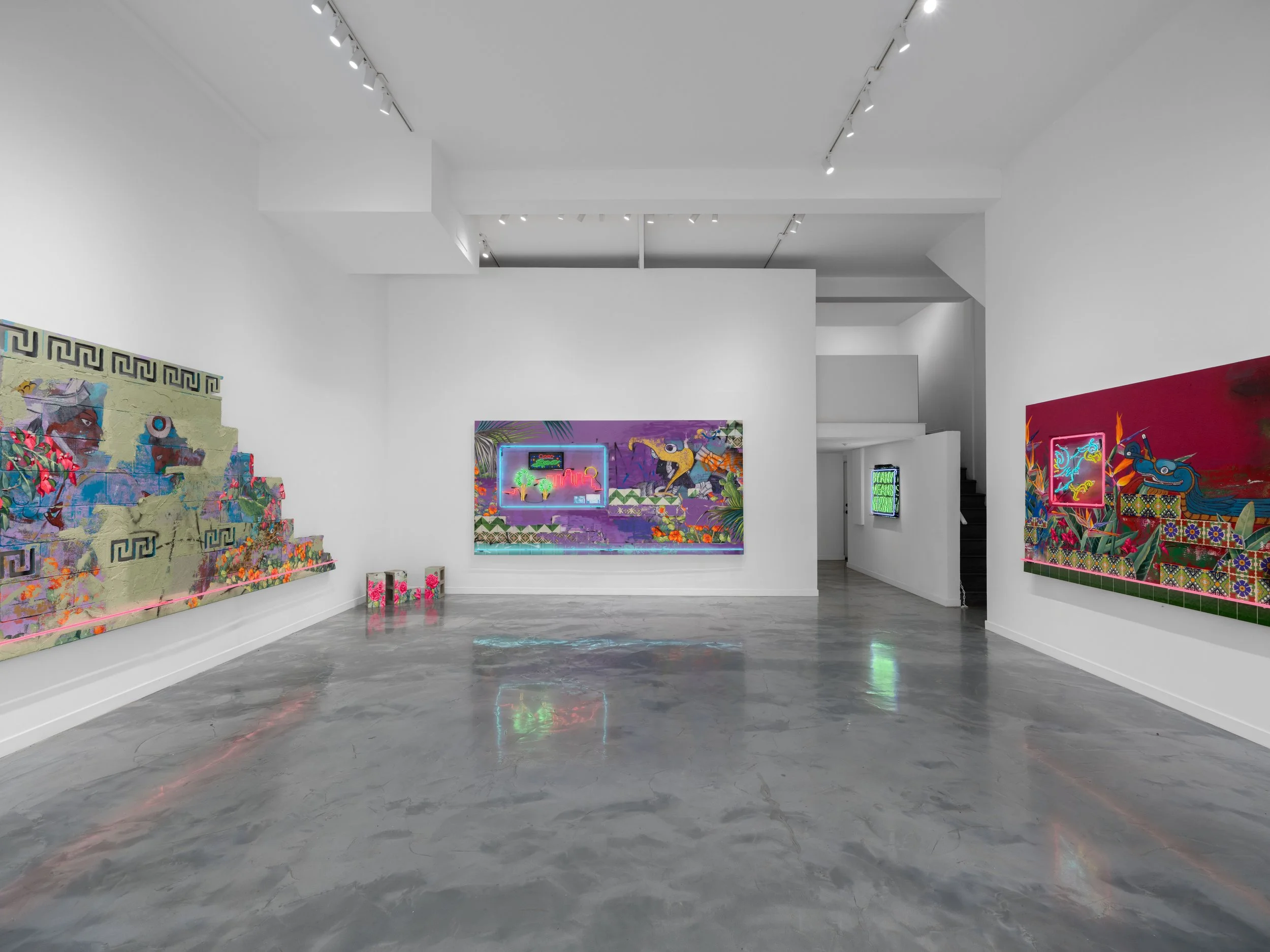
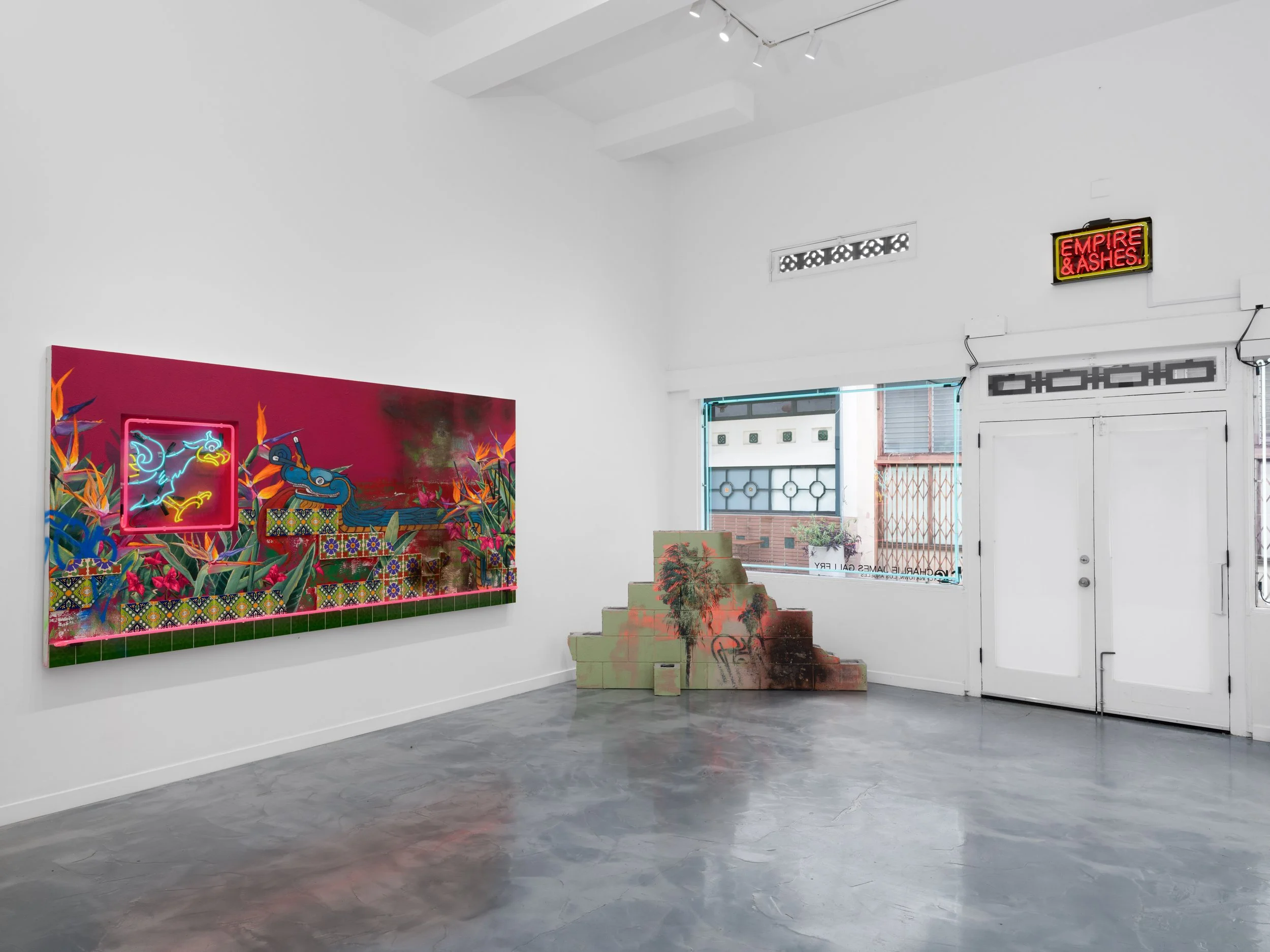
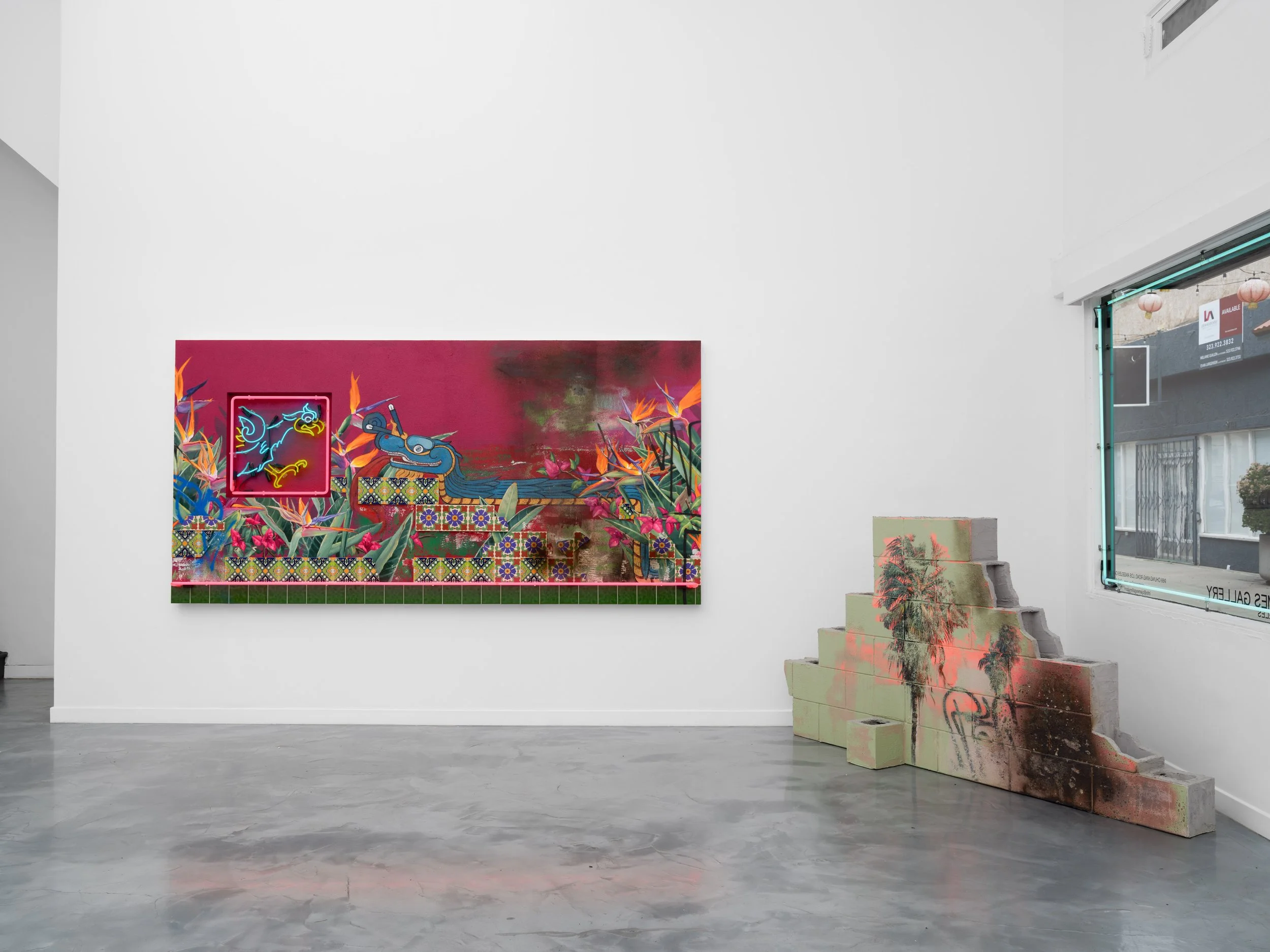
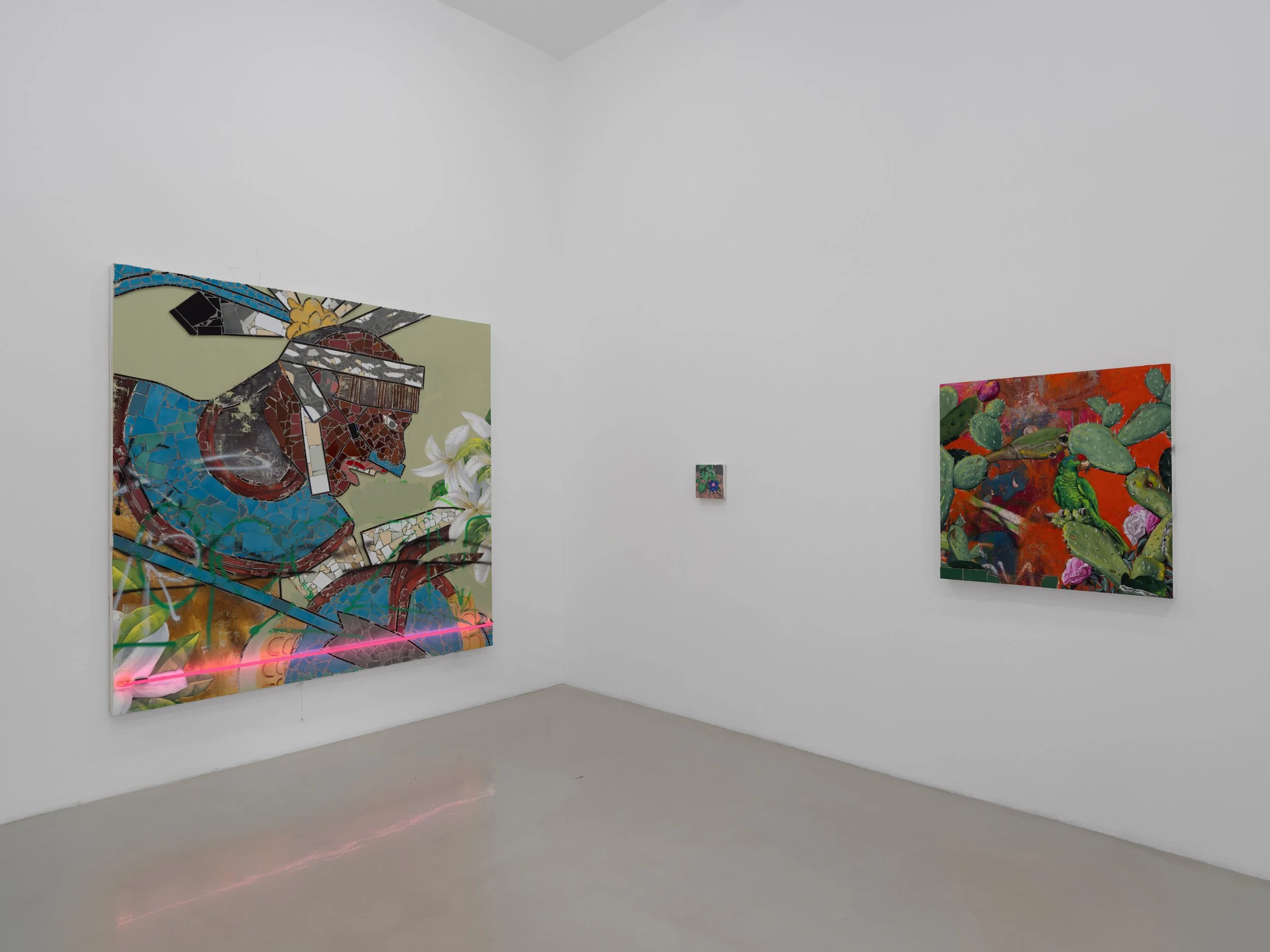
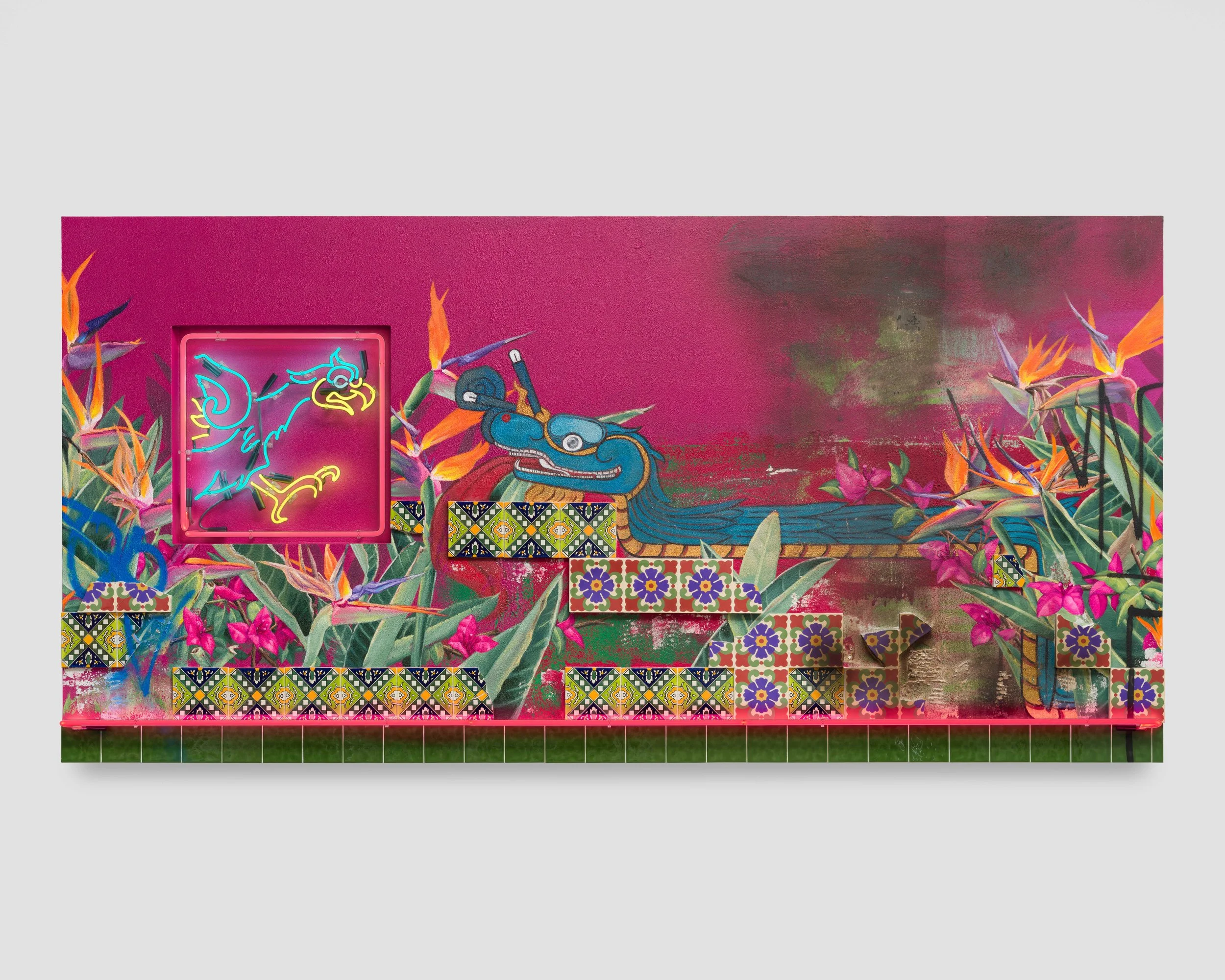
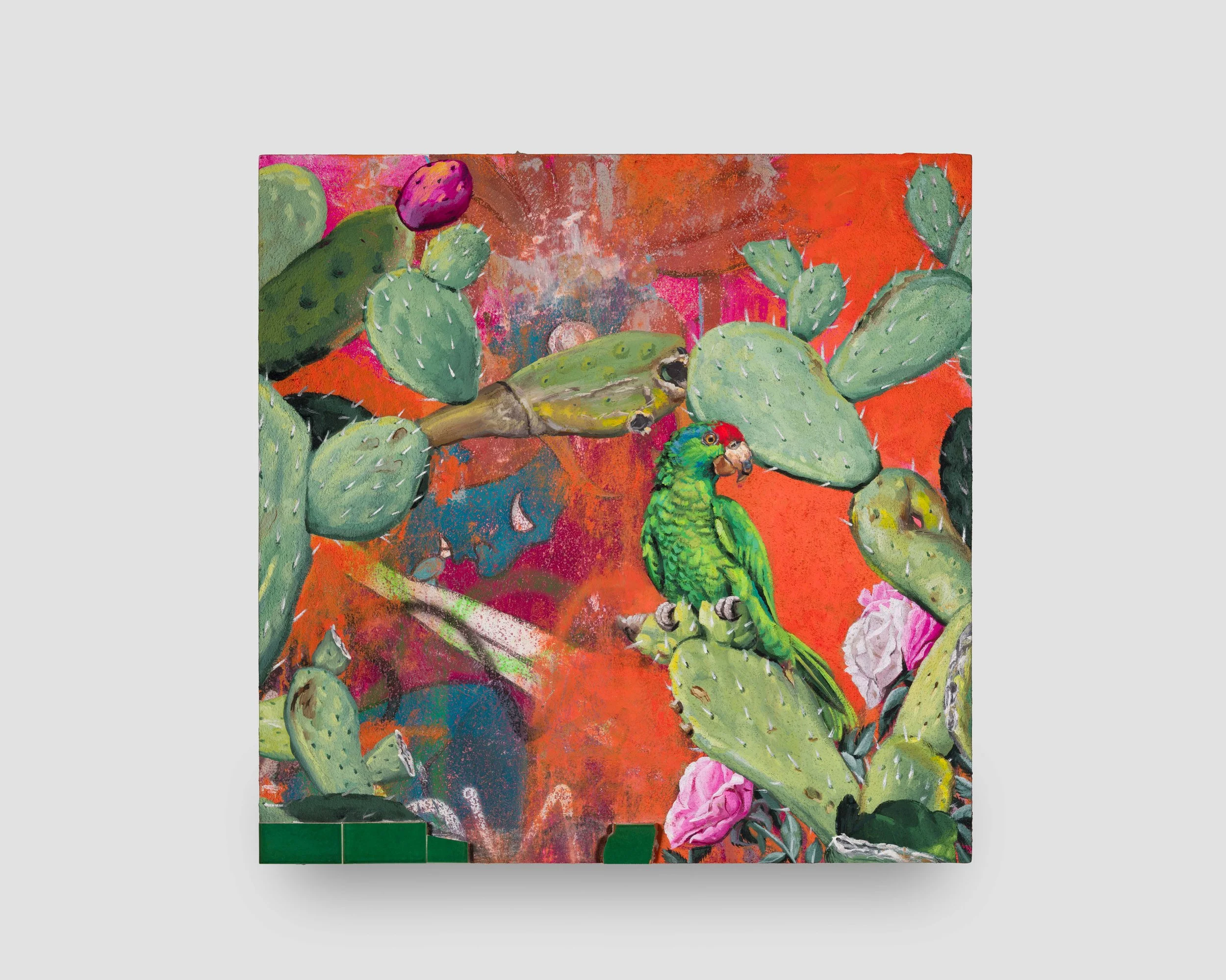
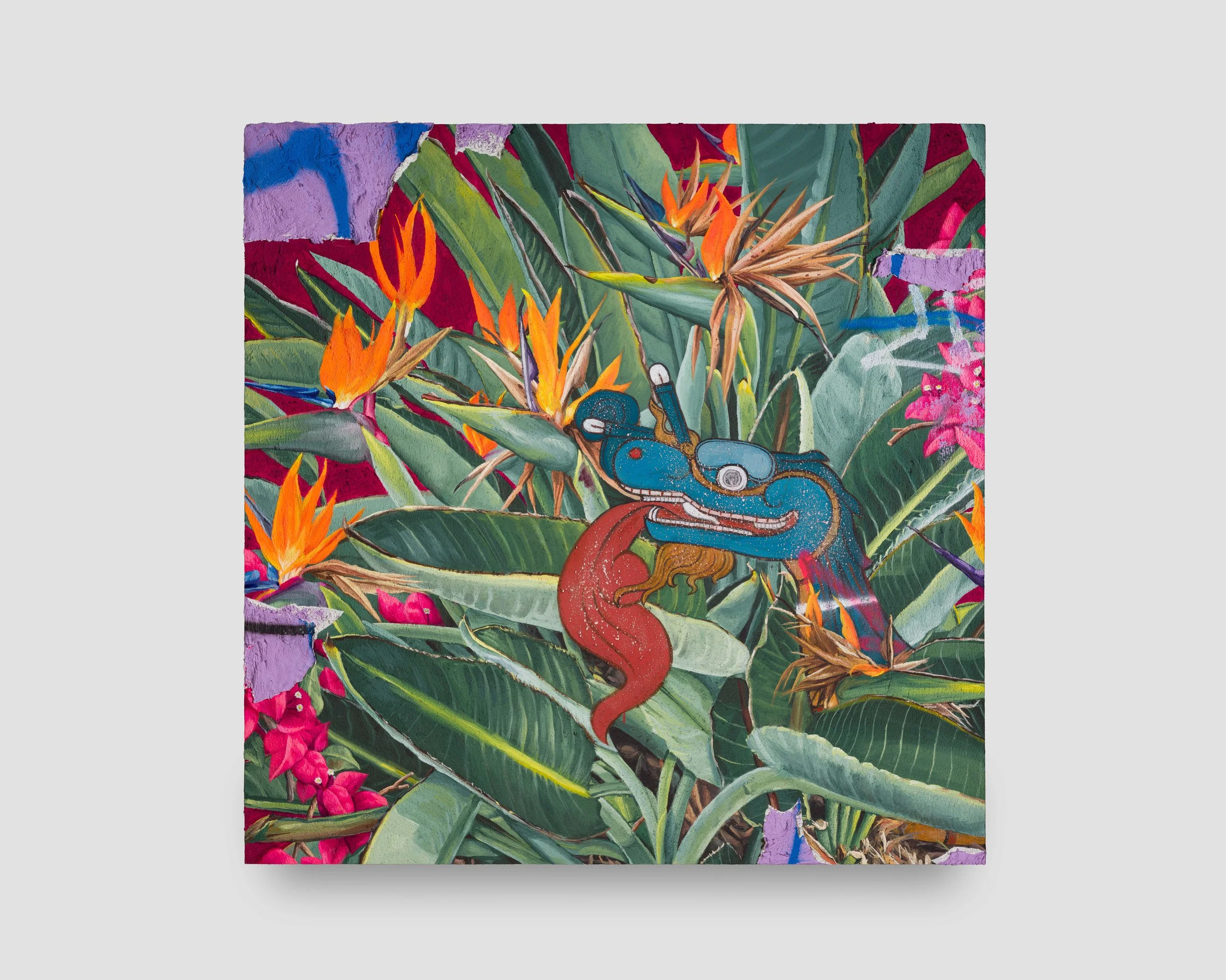
Left in Ruins will include several new examples of Martinez’s signature mixed-media paintings, which remix the visual landscape of Los Angeles, employing its forms and materials in compositions that find beauty in the degraded, the run-down, and the forgotten. Martinez brings utilitarian materials – stucco, cement, ceramic tile, and neon – into the realm of painting, continually building up and demolishing the surface in a reflection of the constant flux of the urban landscape. The city becomes a surface perpetually interrogating the passage of time: when everything is impermanent, what gets kept, and what gets painted over? With these works, Martinez speaks to the city’s past, present, and future, celebrating a place’s ongoing process of becoming rather than any one state of being.
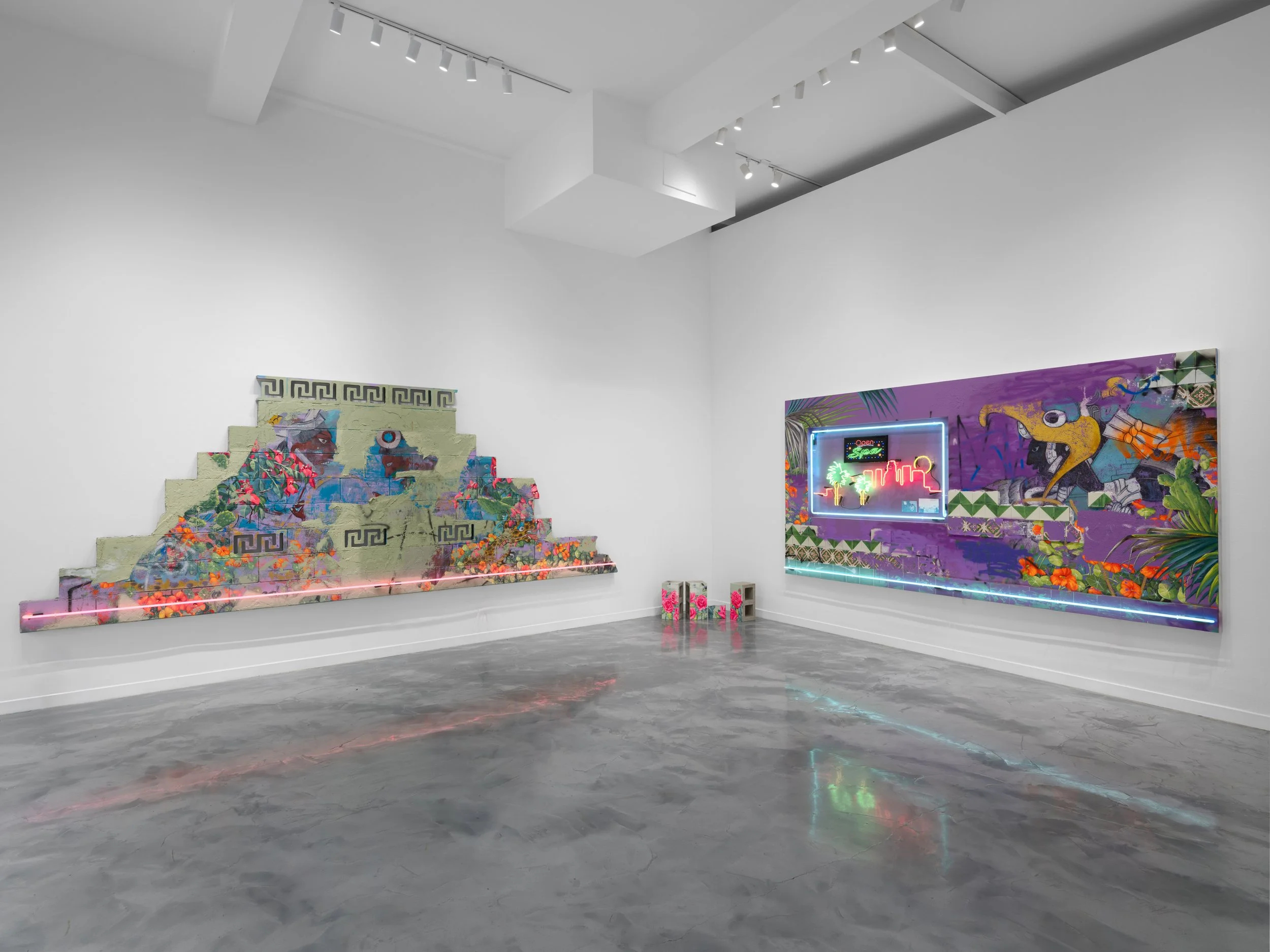
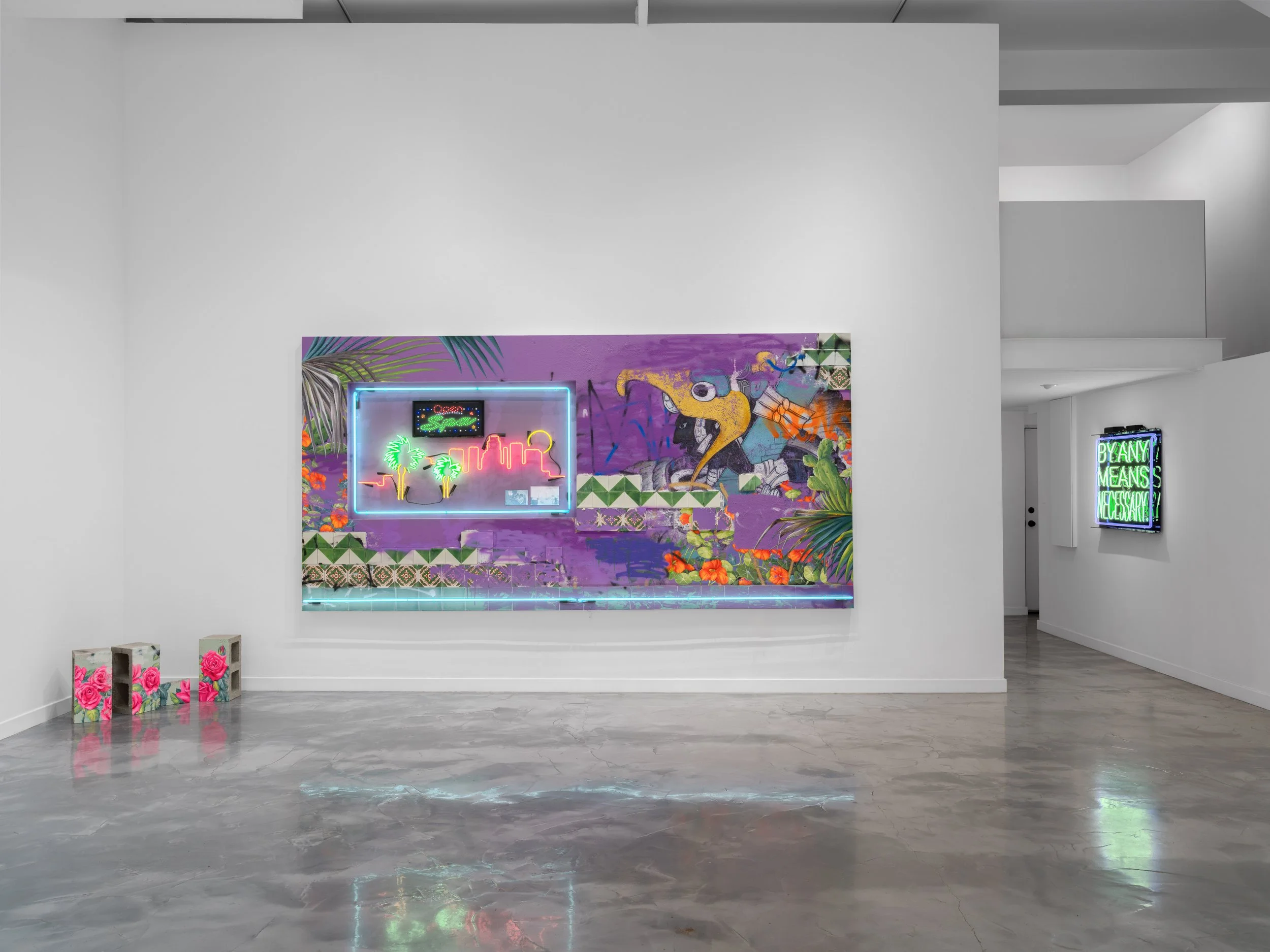
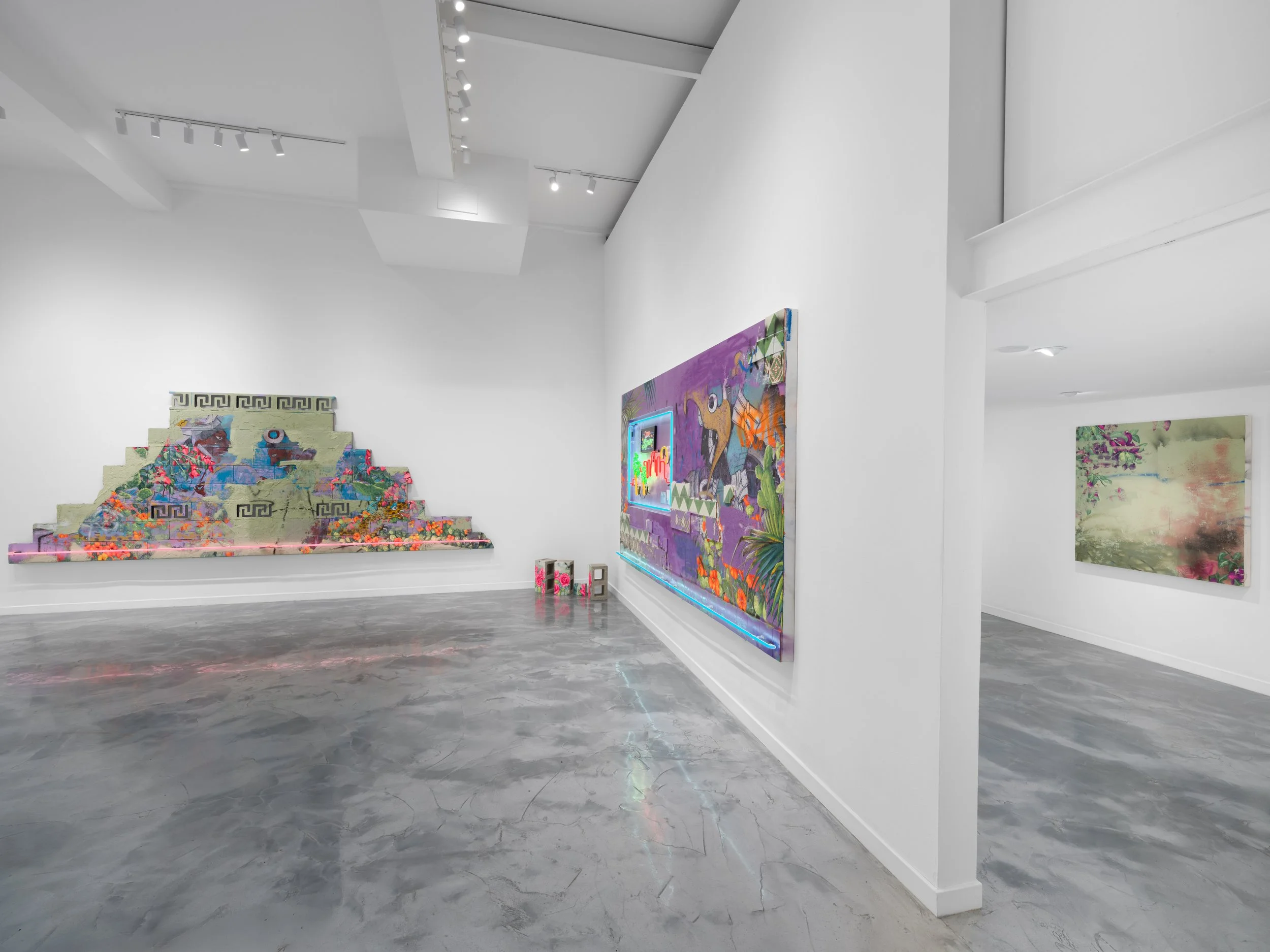
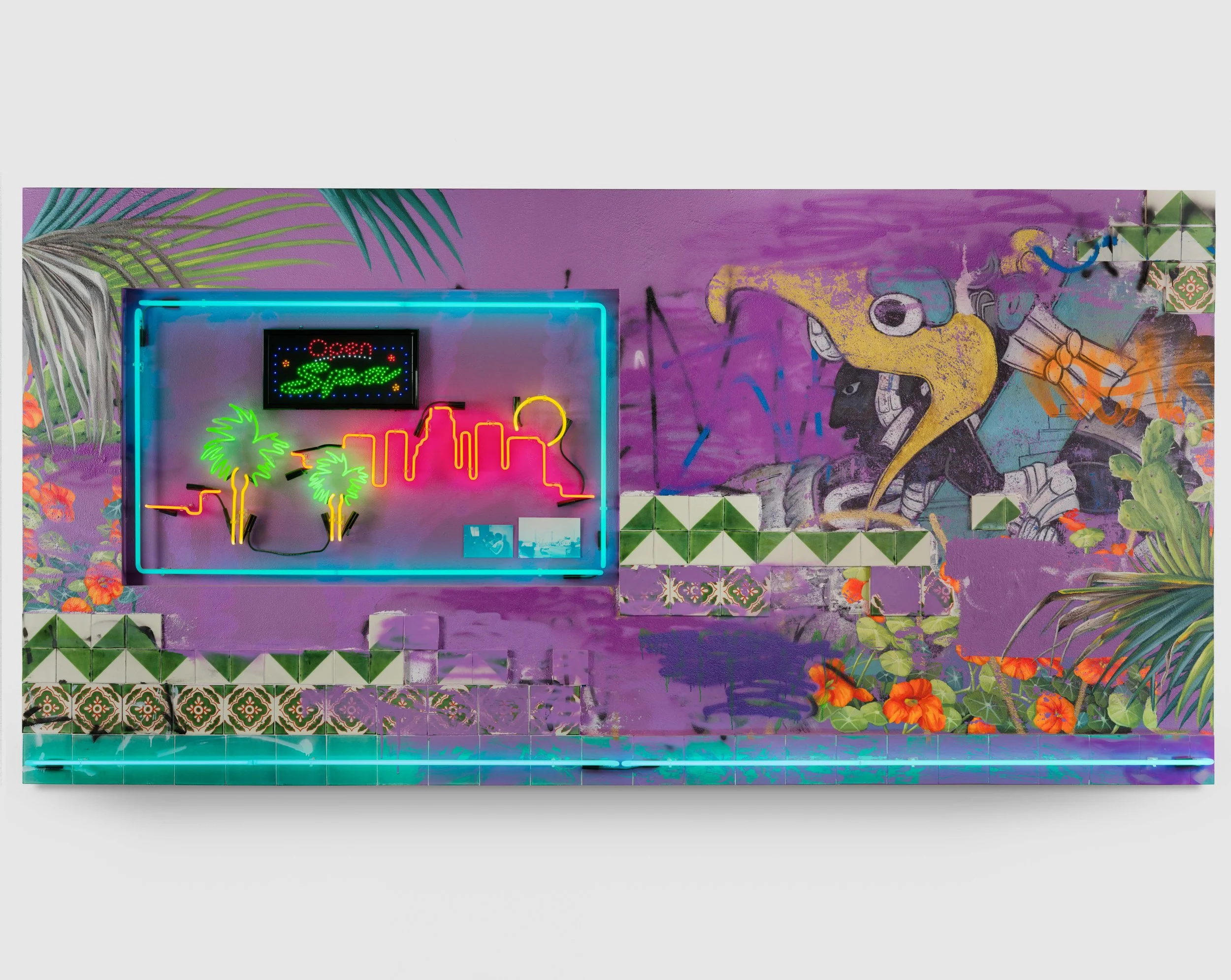
In the largest of these works, Oasis, Martinez plays with traditional ideas of perspective by building depth with layered stucco and paint that is then weathered away using a pressure washer. The city skyline occupies the background of the landscape, but outlined in neon becomes the first thing the eye sees. Conversely, the foreground figure is obscured, hidden behind foliage and scrawled graffiti tags. One can imagine this warrior figure, executed in the style of ancient Mexican murals, as one of the countless Brown bodies who have come to this place seeking the paradise signified here by a blinking neon sign. These migrants predate borders, are native to this soil, and Martinez suggests that though they may be hidden – or forcibly disappeared – their perseverance is built into the very foundation of the city.
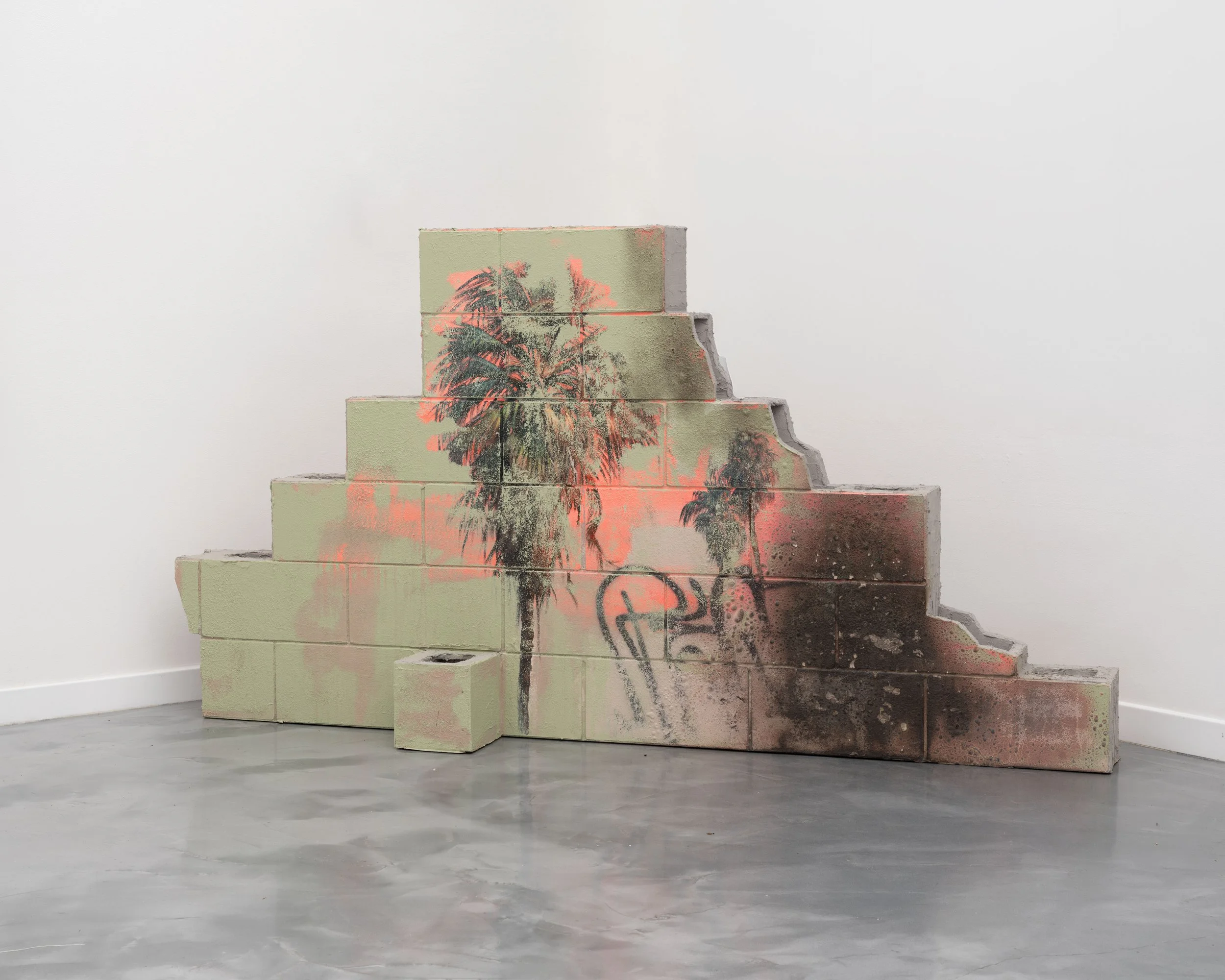
Martinez recently began working with cinderblock as a surface for painting. Two large cinderblock works in the exhibition demonstrate the suggestive power of the material, which Martinez crafts into forms that simultaneously call to mind crumbling modern ruins and ancient pyramidal architecture. This collapsed sense of time pulls the past into the present, layering history in a way that mirrors his layering of material on surface. Scorched Land moves this pyramid form out onto the gallery floor, which, surrounded by single cinder blocks seemingly covered in rogue vegetation, solidifies the empty-lot aesthetic. This work also speaks to the ravages of climate change, with neon-pink wisps of paint that could be magic hour light or the lick of flames among the palms, an idea brought home by the burnt and bubbling surface at bottom right.
This exhibition finds Martinez expanding his interest into new kinds of mural-making, exemplified by the large mosaic painting Warrior Picking Sampaguita. While tile has long played a role in Martinez’s practice, this full-scale engagement with mosaic is being shown for the first time. Here and elsewhere, he uses both Mexican terracotta tile and Machuca cement tile from the Philippines, both of which have a long history of use in Los Angeles architecture. This dual heritage mirrors Martinez’s own, a reminder that the movement of goods through trade – especially in a colonial context – often mirrors the movement of people, resulting in a culture of hybridity that has long defined Los Angeles. The warrior figure here looms large, his clarity in sharp contrast to the half-hidden figures of the paintings. He appears out of history to survey the landscape of the present, his strength, resolve, and ferocity needed now more than ever.
Also on view are the neon signs and Pee-Chee folder drawings for which Martinez has become well known. These works speak directly to the moment, documenting the cruelty and overreach that have characterized immigration enforcement under the current administration. A poignant example is The Battle of Chavez Ravine, which depicts players in the iconic Dodgers uniform among images of arrests, detainments, and protests from the 1950s and 2020s, overseen by a team owner whose money is entangled in ICE detention centers. Time collapses as cycles of violence and corruption play out on the same small patch of land. Martinez expands this drawing practice into a new medium, working on the thick white paperboard used by Home Depot as display signage. These works – all bearing the stamp of “Home Depot Approved” – document in stark relief the recent raids targeting day laborers near the artist’s home and studio. The Home Depot series, like the neon signs, repurposes materials that originate as vehicles for a message at the hardware or liquor store, enlisting them in the struggle against tyranny.
In the downstairs gallery, Martinez has curated an exhibition titled Homegrown of artworks by members of his family, many of whom were practicing artists. In gathering these works together for the first time, Martinez found an unexpected stylistic continuity running up his family tree: graphic works by Patrick’s cousin Rayvan Valdez Martinez (Gonzales), an activist, artist, designer, and silkscreen printer who worked at "La Raza Silkscreen/Graphic Center" from 1977 to 1982, bear resemblance to the crisp linework of Martinez’s Pee Chee folder series of prints and drawings or the more recent Home Depot drawings. Elsewhere, photographs by his father and sculptures by his grandfather evince sustained and simultaneous dedication to craft and an interest in the Los Angeles landscape over decades of family history.
Patrick Martinez (b. 1980, Pasadena, CA) earned his BFA with honors from Art Center College of Design in 2005. His work has been exhibited domestically and internationally in Los Angeles, Mexico City, San Francisco, Minneapolis, Miami, New York, Seoul, and the Netherlands, at venues including the Studio Museum in Harlem, the Smithsonian National Portrait Gallery, the Smithsonian NMAAHC, the Tucson Museum of Art, the Albright-Knox Art Gallery, the Columbus Museum of Art, the Vincent Price Art Museum, the Museum of Latin American Art, the Crocker Art Museum, the Rollins Art Museum, the California African American Museum, the Nerman Museum of Contemporary Art, and El Museo del Barrio, among others.
Patrick’s work resides in the permanent collections of The Broad, the Whitney Museum of American Art, the Crystal Bridges Museum of American Art, the Museum of Contemporary Art Los Angeles (MOCA), San Antonio Museum of Art, Dallas Museum of Art, Buffalo AKG Art Museum, the Rubell Museum, the Smithsonian National Museum of American History, the California African American Museum, the Autry Museum of the American West, the Benton Museum of Art at Pomona College, the Nerman Museum of Contemporary Art, the Smithsonian National Museum of African American History and Culture, the Los Angeles County Museum of Art (LACMA), the Tucson Museum of Art, the Pizzuti Collection of the Columbus Museum of Art, the University of North Dakota Permanent Collection, the JPMorgan Chase Art Collection, the Crocker Art Museum, the Escalette Permanent Collection of Art at Chapman University, the Manetti-Shrem Museum of Art at UC Davis, the Rollins Museum of Art, and the Museum of Latin American Art, among others.
Patrick was awarded a 2020 Rauschenberg Residency on Captiva Island, FL and in 2022, he was awarded a residency at the Atlantic Center for the Arts. In the fall of 2021 Patrick was the subject of a solo museum exhibition at the Tucson Museum of Art entitled Look What You Created. Patrick’s suite of ten neon pieces purchased by the Whitney Museum of American Art was a yearlong exhibition installed on the Kenneth C. Griffin Hall in the entrance of the Museum. Patrick Martinez’s “Ghost Land” exhibition was on view at the ICA San Francisco through January 2024. Through April 2024, Patrick’s work was shown at The Broad in Los Angeles as part of the exhibition “Desire, Knowledge, and Hope (with Smog)”. Patrick’s solo exhibition at the Dallas Contemporary Museum “Histories” was view through January 2025. Patrick’s work is featured in the 2025 Made in LA Biennial at the Hammer Museum through March 1, 2026.
Patrick lives and works in Los Angeles, CA and is represented by Charlie James Gallery, Los Angeles.
Selected Works
Installation